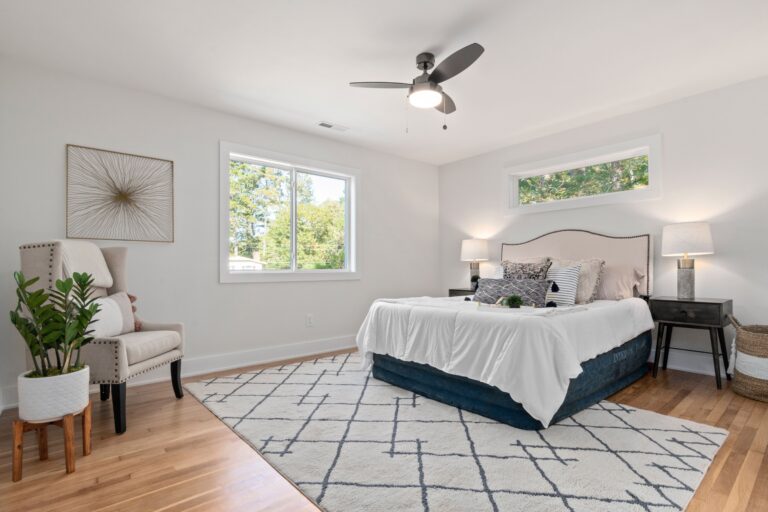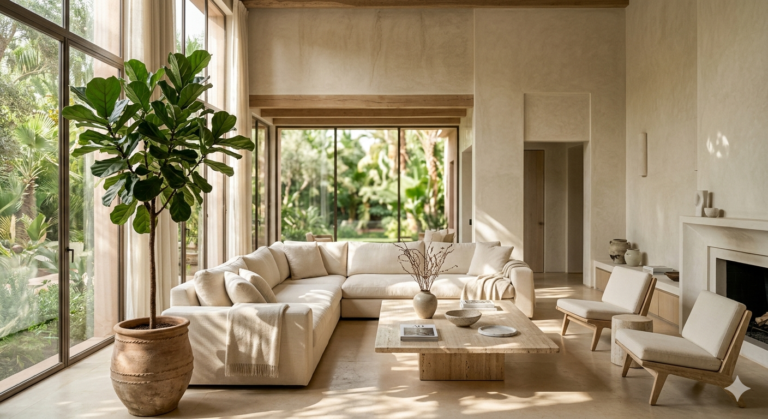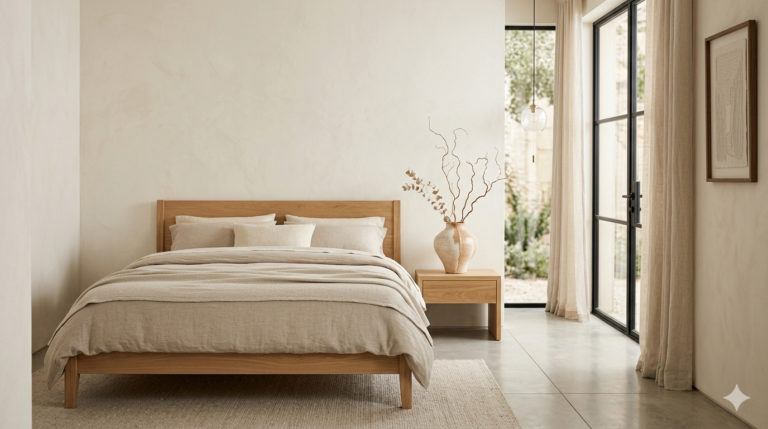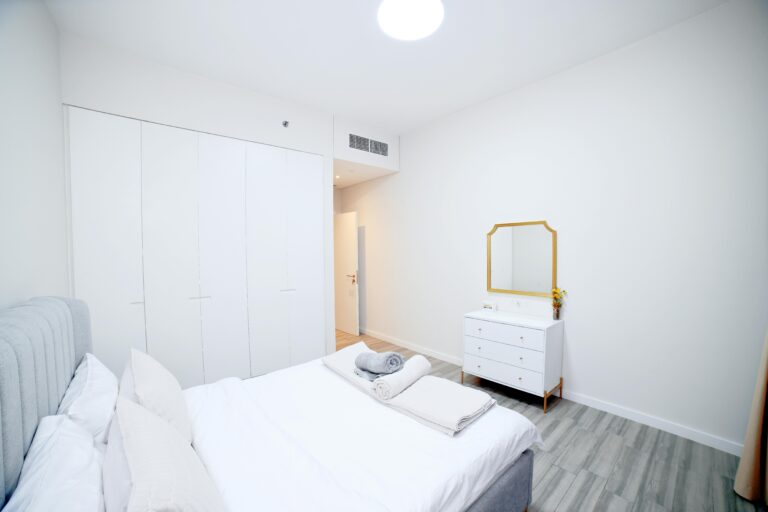
Feng Shui Bed Placement: 7 Rules + Renter-Friendly Fixes
Home / Feng shui bed placement
Feng Shui Bed Placement: Where to Put Your Bed
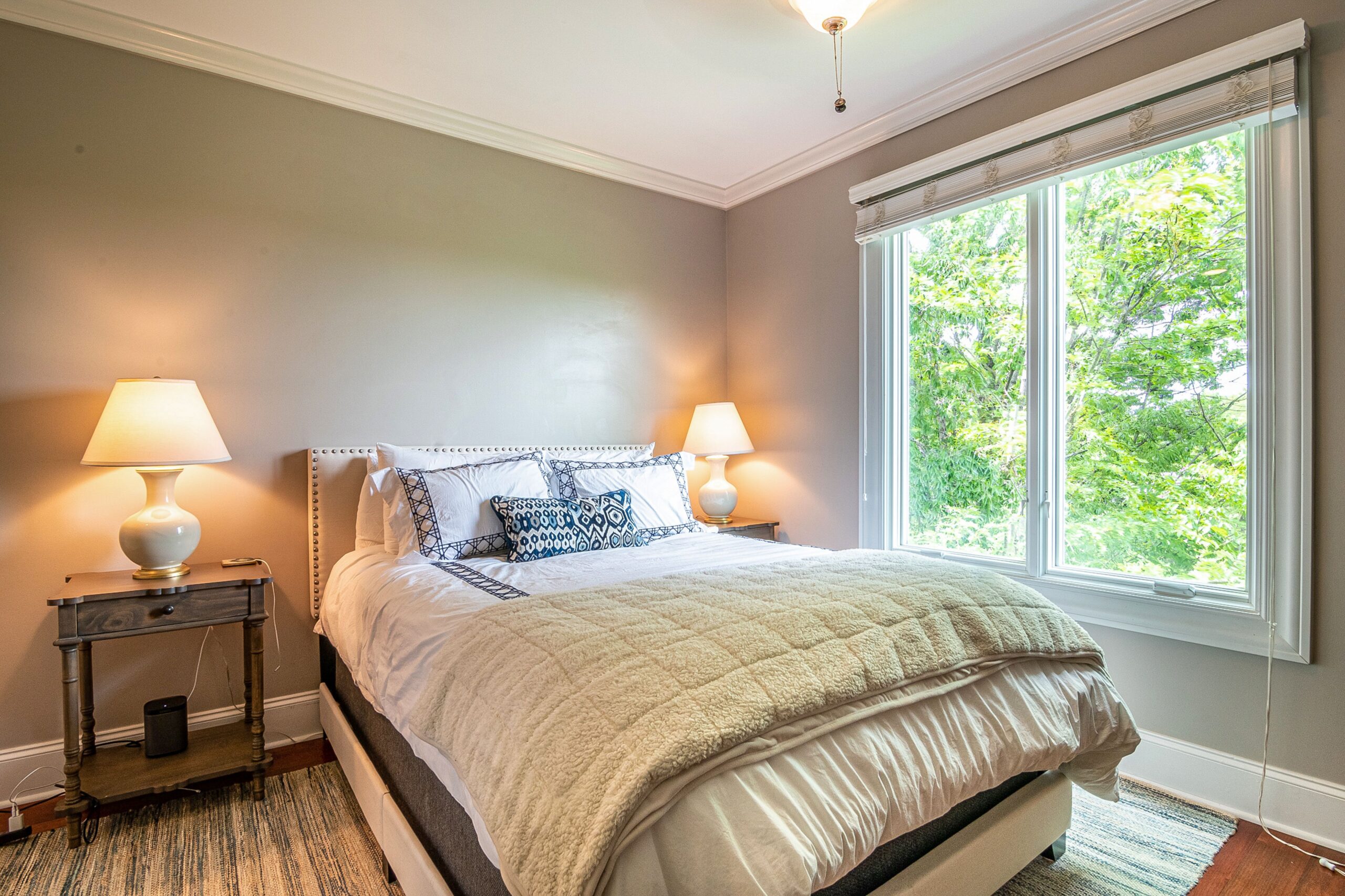
Good feng shui bed placement shapes the whole room. Here is how traditional feng shui approaches it, which parts are simply good design, and how to compromise in a rental.
The short answer: feng shui bed placement usually starts with the command position: the headboard against a solid wall, the door visible from the bed, and no straight line between the foot of the bed and the door. When your room can't deliver all three, keep a supported headboard and easy access to the bed first, and treat the rest as flexible.
How to read this guide. Feng shui has several schools that disagree on details. We label traditional interpretations separately from practical design reasoning, and nothing here guarantees better sleep, health, or luck.
What Is Feng Shui Bed Placement?
Feng shui (风水, fēngshuǐ, "wind-water") is a traditional Chinese practice of arranging buildings and rooms to suit the people in them. It borrows a few key terms. Qi is the life energy that practitioners say moves through a space. The bagua is an eight-sided map that divides a space into zones linked to areas of life. Different schools weigh these ideas differently; some focus on room layout, others on compass directions. For other perspectives, see the Shawood and Gira feng shui bedroom guides.
Feng shui bed placement is that thinking applied to the bed, the largest and most important piece of furniture in the room. No controlled research shows that placement itself improves sleep. But much of the advice overlaps with sound design: reduce disturbance, keep paths clear, control light and drafts, and make the bed feel stable. That is how we use it here, as a framework to adapt, not a rulebook.
The Command Position: The Most Important Starting Point
The command position is the layout feng shui teachers most often recommend. The bed sits where you can see the door from lying or sitting up, but not directly in line with it, ideally on the far side of the room with a solid wall behind the headboard. The traditional idea is that you "command" the room the way a person at the head of a table sees everyone arriving.
The practical case is easier to defend: most people feel more settled when they can see the entrance, have a wall behind them, and aren't startled by someone passing the doorway. It is a comfort principle, not a promise of better sleep or health.
To apply it, stand in the doorway and imagine the room from the pillow. Then:
- Pick the wall farthest from the door, or diagonal to it, that has no window or radiator.
- Check that you can see the door from the pillow without the bed pointing at it.
- Leave a path on at least one side, ideally both.
Seven Feng Shui Bed Placement Rules
These build on the command position without repeating it.
1. Choose a supported headboard wall
Traditionally, a solid wall gives symbolic support. Practically, it stops the bed from sliding, keeps pillows from falling behind it, and shields you from drafts and noise. A sturdy headboard supplies the same effect when the wall is not ideal.
2. Keep your feet from pointing straight at the door
This feng shui bed placement rule has traditional reasoning, covered in the next section. The simple fix is to angle the bed or move it to a side wall.
3. Keep both sides reachable
In feng shui bed placement, open access on both sides represents balance. In practice it lets two people get out of bed freely and makes it easy to make the bed and clean around it.
4. Avoid heavy overhead features
Exposed beams, a low sloped ceiling, a heavy shelf, or a large ceiling fixture directly above the bed are said to press down on the sleeper. Practically, they raise the risk of bumped heads and a closed-in feeling. If you can't avoid a beam, orient the bed so the beam runs along it, not across it.
5. Point mirrors away from the bed
Feng shui schools commonly caution against mirrors facing the bed because reflections are said to stir the room's energy. Practically, moving reflections and light in the dark can be unsettling. A mirror on a closet door that you can cover at night, or one that faces away from the bed, solves it.
6. Keep the bed away from vents, radiators, and drafts
This is a comfort rule more than a traditional one. Avoid placing the head directly against a radiator or beneath a forced-air vent, and move away from leaky windows when you can.
7. Keep the bed's surroundings uncluttered
Clear floor space around and beneath the bed is a classic feng shui recommendation. Store only soft, light items such as spare bedding beneath it, and keep nightstand surfaces to a lamp, a book, and a glass of water.
Is It Bad to Have Your Bed Facing the Door?
Not inherently. In some traditions of feng shui bed placement, a bed with its foot pointing straight at the door is called the "coffin position," because the dead were carried out feet first, and energy is said to rush along that line. That is a symbolic interpretation, not evidence that anything bad will happen.
The practical issues are real but modest: light and noise from the hall reach you, a passerby sees you straight away, and you have less privacy. If your room is narrow and the bed has to face the door, you have several reasonable options:
- Angle the bed a few degrees, or shift it toward one side so it is no longer centered on the doorway.
- Place a low bench, a rolled rug, or a folding screen between the foot of the bed and the door.
- Choose a footboard or a bed with a taller, solid foot panel.
- Hang a curtain or door panel on the inside of the doorway, if the landlord allows it.
Feng Shui Bed Placement Direction: North, South, East, and West
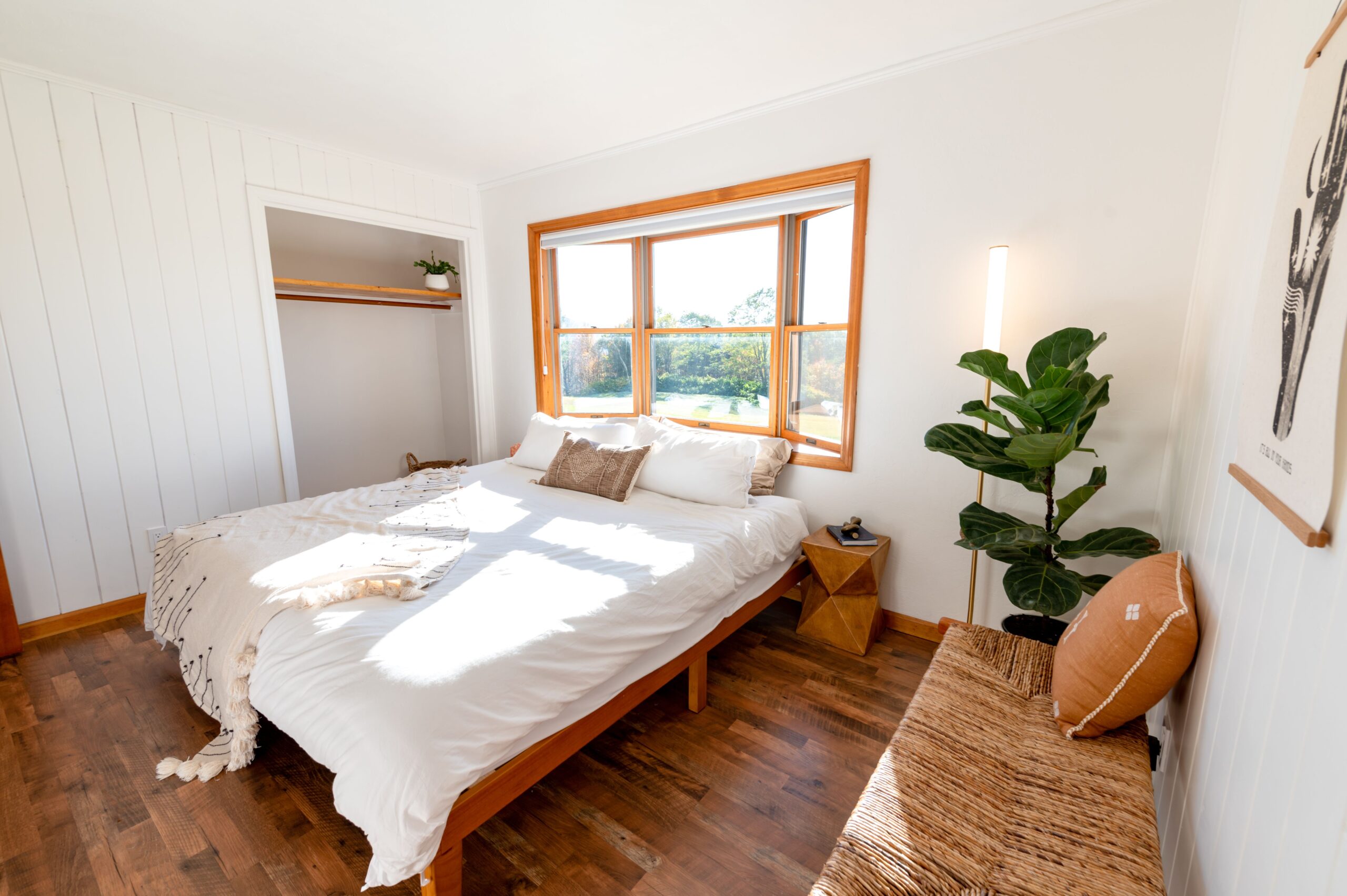
Direction refers to where your head points while you sleep. It is the second layer of feng shui bed placement and mostly comes from the compass-based schools. Common associations are:
- North: stillness, rest, and reflection.
- East: growth, vitality, and new beginnings.
- South: activity, warmth, and recognition.
- West: ease, creativity, and relaxation.
These associations are not universal. Some sources recommend one direction where another source recommends the opposite, and a few schools give no head direction at all. Some systems use the Kua number, a figure derived from your birth year (and, in many versions, gender) that assigns "favorable" and "unfavorable" directions. Methods and results vary between practitioners, and there is no evidence that any compass direction reliably improves sleep, health, or success.
A phone compass will show you which wall faces which direction, but it can't settle a disagreement between schools. If you like the idea, treat direction as a tiebreaker after the command position and your room's practical limits.
Feng Shui Bed Placement for Wealth
There is no bed position that creates wealth, and no evidence that placing a bed, plant, crystal, or object in a particular spot attracts money. Within the tradition, wealth is linked to a zone of the bagua. Where that zone sits depends on the method: many Western teachers place it in the far left corner as you enter the room, while classical compass methods place it in the southeast.
If the symbolism appeals to you, use it as a prompt rather than a promise: tidy that corner, put something you find meaningful there, and keep paperwork and bills out of the bedroom. You don't need to move your bed into the wealth zone, and doing so at the expense of the command position or a workable layout would defeat the purpose.
Where to Place a Bed in Different Bedroom Layouts
Standard rectangular bedroom
Put the headboard on the wall opposite or diagonal to the door, with the foot angled away from the doorway. This is the easiest way to get the command position.
Narrow bedroom
Placing the headboard on the short wall across from the door often puts the foot in line with the doorway. Try the headboard on a long wall, pushed to the far end, and keep a walkway on the other side. A bench or slim console at the foot makes the line less direct.
Bed Placement Ideas for Small Bedrooms
Prioritize a clear route to the door and the supported headboard. Slim nightstands, a stool, or a small shelf work better than a full set, and a corner placement is a reasonable compromise if one side stays open for the sleeper who needs it most. For more layouts that save floor space, see our guide to space-saving bed ideas.
Studio apartment
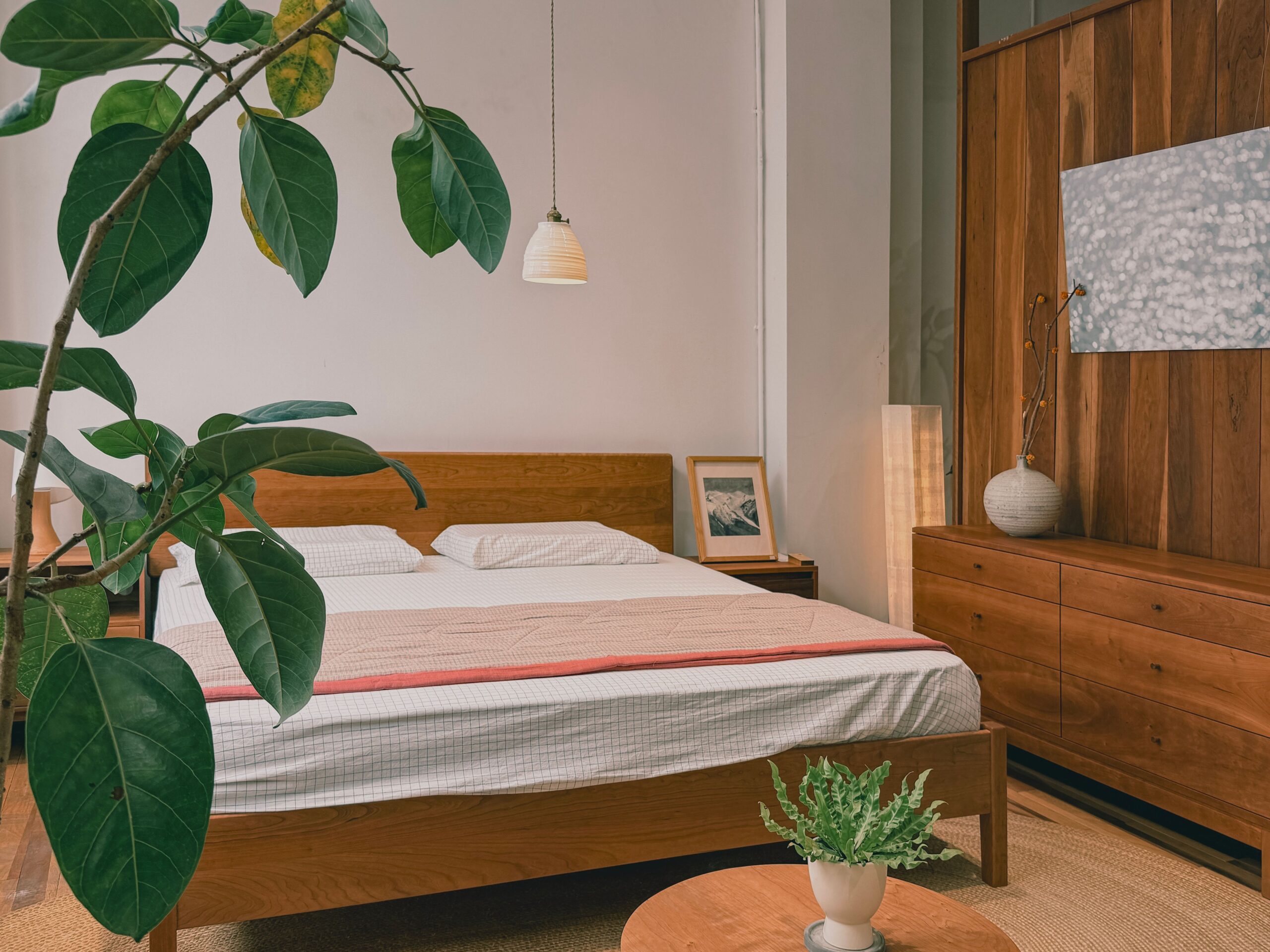
Put the bed as far from the entrance and the kitchen as you can. Define the sleeping area with a bookcase, curtain, or screen, and a rug under the bed. Avoid facing the bed toward the desk or television, which keeps work and screens from dominating the space where you rest. For full floor plans, see our studio apartment layout guide.
Bedrooms with multiple doors
Base the command position on the door you use most, usually the hallway door. For closet and bathroom doors, the goal is simply to keep the bed out of a direct line with them and to keep every door able to open fully.
Large primary bedrooms
Resist floating the bed in the middle. Anchor it to the command wall, use a rug to define the sleeping zone, and keep any seating or desk off to one side so it does not dominate the view from the pillow.
Feng Shui Bed Placement for Renters
Good feng shui bed placement in a renter-friendly bedroom layout works with the room's fixed features rather than fighting them. Prioritize safety, movement, and daily function over the ideal arrangement, and choose the least permanent fix.
| Constraint | Preferred arrangement | Reasonable alternative |
|---|---|---|
| Only suitable wall has a window | Another solid wall | Substantial headboard, lined curtains, keep the window reachable |
| Narrow room puts the bed facing the door | Diagonal to the door | Angle the bed; add a bench or screen at the foot |
| Bed fits against one side wall only | Both sides open | Keep the entry side open; choose the wall that gives the person leaving first easy access |
| Closet or bathroom door blocks a wall | Bed outside the door swing | Leave about 3 feet for the door to open and a clear path |
| Radiator or vent on the best wall | Another wall, if one works | Keep the bed and all bedding clear of radiators and vents, following the manufacturer's required clearances |
| Beam or sloped ceiling | Bed away from it | Beam parallel to the bed; head where the ceiling is highest |
| No drilling or permanent changes | Fixtures installed | Freestanding headboard, plug-in sconces, rugs, a tension rod, removable hooks rated for the weight |
What to Do When Feng Shui Bed Placement Rules Conflict
Real rooms rarely satisfy every rule. This is a practical editorial framework, not a hierarchy shared by every feng shui school. Work down the list and stop when the arrangement feels comfortable:
- Safety, comfortable movement, and clear exits.
- The most practical headboard position.
- Visibility of the door, and avoiding a direct line from the foot of the bed to it.
- Access to both sides of the bed, where space allows.
- Windows, mirrors, overhead features, and storage.
- Traditional sleeping-direction preferences.
- A reasonable compromise when the ideal is impossible.
A Practical Example: Feng Shui Bed Placement in a Small Rental Bedroom
This is a hypothetical scenario, not a real client case. Imagine a 10-by-12-foot rental bedroom. The door is in the corner of one short wall. The window is centered on the opposite short wall, with a radiator under it. Closet doors fill most of one 12-foot wall, and the opposite 12-foot wall is blank. You have a queen bed (about 5 by 6.7 feet) and cannot drill into walls.
The window wall is out: the radiator blocks it, and the window brings drafts. Placing the headboard on the short wall near the door puts the bed in the doorway's line. So the best option is the blank 12-foot wall, with the headboard centered on it. That gives a solid wall behind the bed, leaves about 3.5 feet on each side (12 feet minus the 5-foot bed, split in two), and lets you see the door by turning your head.
It also leaves approximately 40 inches between the foot of the bed and the closet doors (10 feet minus 6.7 feet). That may provide workable clearance, but check the actual door swing and walking path before settling on the layout; sliding doors generally need less. A plug-in wall sconce and a slim nightstand on the door side keep the surface tidy without any installation.
It is not a perfect command position, since the door is off to the side rather than straight ahead. It is the best balance of support, access, and function the room allows, which is the point of feng shui bed placement in a rental.
Energy Flow and Natural Light in the Bedroom
In feng shui bed placement, qi is said to move best through clear paths and open sightlines. In design terms, that means you can walk from the door to the bed, and around it, without turning sideways or stepping over things.
- Clear walking paths: keep the route from the door to each side of the bed free of bags, baskets, and furniture corners.
- Unblocked entrances: the door should open fully, with nothing stored behind it.
- Open sightlines: from the bed, you should see the door and a calm view, not a pile of laundry or a desk.
- Natural light: morning daylight is widely recommended for a steady sleep routine. Sheer curtains let it in; lined curtains or blinds block glare and street light at night.
For another view on positive energy placement, see this Rossetti Art guide. The same principles work in other rooms, as in our feng shui small living room layout.
Nightstand Feng Shui: Arranging Your Bedside Space
In feng shui bed placement, a nightstand on each side of the bed traditionally stands for balance, and similar pieces add visual stability. Practically, they give each sleeper a place for a lamp, a charger, and a glass of water.
How many nightstands do you need?
Couples usually want one per side, of similar height and visual weight; they don't need to match exactly. A single sleeper needs only one. Some teachers suggest a second small table or stool for symmetry, which is optional.
What to keep on a nightstand, and what to leave off
Keep a soft lamp, the book you are reading, and one object you like. Leave off extra electronics, work papers, cluttered accessories, and anything that reminds you of stress, such as bills or to-do lists. In a small rental, a slim table or a stool works as well as a full nightstand and needs no installation.
Where to Place a Dresser in Feng Shui
Feng shui bed placement advice says little about dressers beyond keeping the room balanced and the paths open, so practical rules do most of the work. Place the dresser on a secondary wall, out of the main route between the door and the bed, with room in front to open drawers fully (about 36 inches is comfortable).
The usual mistakes are blocking the walking path, crowding the sleeping area, and putting one large piece on one side so the room feels lopsided. Avoid a tall, heavy dresser right beside the head of the bed. For a furniture maker's take, see Hernest's feng shui bedroom layout guide.
Common Feng Shui Bed Placement Mistakes
Mirrors facing the bed, beams overhead, and electronics are covered above. These are the other feng shui bed placement issues teachers most often flag:
- Too many plants: a few are fine, but a crowded room feels busy and needs more watering and upkeep.
- Water features: traditionally linked with active energy in a space for rest; practically, they add noise and humidity.
- Sharp corners pointing at the bed: traditionally called "poison arrows." Practically, they are bumping hazards, so angle the furniture or soften the corner with a lamp or a plant.
- Excessive under-bed storage: tradition prefers open space to circulate; practically, it gathers dust. Keep it to a little soft bedding.
- Dark, crowded layouts: warm lighting and fewer pieces make the room easier to rest in.
Feng Shui Bed Placement Examples by Room Size
These are typical starting points, not fixed rules. For arranging the whole room, see our feng shui bedroom layout rules.
| Room | Bed | Nightstands | Dresser |
|---|---|---|---|
| Small (about 10 by 10 feet or less) | Headboard on a solid wall; keep at least one side open | Slim table or stool on each side, or one plus a shelf | Narrow piece on a side wall, or use the closet |
| Medium (about 12 by 12 feet) | Headboard on the wall diagonal to the door, both sides open | A balanced pair | On a secondary wall, out of the walking path |
| Large primary (about 14 by 16 feet or more) | Headboard on the command wall, not floating | A pair, with a rug anchoring the sleeping zone | On a side wall, with seating kept away from the bed |
Bedroom Design Details That Support a Calm Space
These details support any feng shui bed placement, and none require an expensive purchase. For a whole-room approach, see our guide on how to feng shui your bedroom.
- Lighting: use warm bulbs (around 2700K) in a pair of lamps, or one lamp plus a dimmer plug, and cover bright windows at night.
- Color: choose a restrained palette of two or three soft neutrals or muted tones, with one accent at most. For wall ideas that suit a rental, see our guide to renter-friendly wallpaper.
- Texture: coordinated bedding in linen, cotton, or wool, with a throw and a rug adds depth for little money.
- Furniture: keep to the bed, one or two compact bedside pieces, and a dresser or wardrobe if space allows.
- Storage: closed bins, a hanging organizer, or a low bench keep surfaces clear, and spare bedding is the best under-bed storage. More ideas in our storage solutions for small spaces. If you need off-site space, read our CubeSmart self storage reviews.
- Electronics: some sleep research suggests that screen light before bed can disturb sleep, so a charging spot across the room is a simple habit.
- Plants and art: one or two plants and calm artwork are enough; the goal is a room that feels uncluttered.
Feng Shui Bed Placement Checklist
Frequently Asked Questions
Can I put my bed under a window?
Many traditional sources prefer a solid wall behind the headboard, and a window also brings drafts, temperature swings, and morning light. If a window wall is your only option, use lined curtains or a thermal shade, choose a substantial headboard, and make sure the window can still be reached and opened in an emergency.
Is it bad to place the bed in the middle of the room?
A bed floating away from every wall lacks the traditional sense of support, and it rarely suits a small bedroom anyway. In a large room or studio, a tall freestanding headboard, a console, or a low bookcase behind the bed can create a back without drilling.
Does the headboard matter in feng shui?
Traditionally, a solid, stable headboard stands in for the support of a wall. Practically, it also keeps pillows, lamps, and drafts in check. A basic upholstered or wood headboard that sits firmly against the wall is enough; it does not need to be expensive.
What if the bathroom is on the other side of the headboard wall?
Some feng shui sources advise avoiding this because of the plumbing and activity on the other side. Practically, the concern is noise, so a rug, a bookcase, or a heavier headboard can help. If it is the only workable wall, choose it and treat the noise as the real problem to solve.
Can I use a mirror to see the door from my bed?
Some people do, but most feng shui teachers recommend keeping mirrors from facing the bed, and a reflection in a dark room can be disorienting. Moving the bed a few inches or angling it slightly is usually a better fix than relying on a mirror.
Do both sides of the bed need to be open?
Traditionally, open access on both sides signals balance, especially for couples. Practically, aim for roughly 24 inches of walking space where the room allows. If one side must stay against a wall, make sure the person on the inside can leave the bed comfortably.
Is there scientific evidence that feng shui bed placement improves sleep?
There is no reliable research showing that feng shui placement itself improves sleep, health, or luck. Some principles overlap with sound sleep habits, such as a dark, quiet, uncluttered room, but the traditional explanations should be treated as cultural interpretation, not proven cause and effect.
What should I avoid in a feng shui bedroom?
Common feng shui bed placement cautions include mirrors facing the bed, beams overhead, clutter, excess electronics, sharp corners pointing at the bed, and a bed in line with the door. Treat these as traditional preferences and practical comfort issues, not rules with guaranteed consequences.
Should you have two nightstands in feng shui?
Traditionally, a pair signals balance, especially for couples. A single sleeper can use one, and a slim table or stool on the other side keeps the look balanced if you prefer symmetry.
Is under-bed storage bad feng shui?
Many teachers prefer a clear space under the bed so energy can circulate. Practically, limiting it to soft items such as spare bedding keeps dust down and the bed feeling light.
Can you have plants in a feng shui bedroom?
Yes, in moderation. One or two healthy plants are usually considered fine, while a crowded room can feel busy. Choose plants you can keep alive and avoid anything dying or dusty.
Where should a dresser go in a feng shui bedroom?
Place it on a secondary wall, out of the main path between the door and the bed, with enough room to open the drawers fully. Avoid a tall, heavy dresser right next to the pillow.
Final Takeaway
For feng shui bed placement, start with a supported headboard and a view of the door, keep your feet out of the doorway's line, and leave room to move. Everything else, from direction to the bagua, is a secondary preference you can adopt or ignore. In a rental, a calm, practical layout you can live with beats a perfect rule your room can't support.
Further Reading and Watching
These outside guides and videos approach the topic in different ways:
- Feng Shui Bedroom Position: Where to Place Your Bed (Nectar)
- Designing a Feng Shui Bedroom: Tips and Tricks (Gira)
- Feng Shui Bedroom Guide (Shawood)
- Feng Shui Bedroom Layout for Better Sleep and Positive Energy (Hernest)
- Positive Energy Placement in a Feng Shui Bedroom (Rossetti Art)
- Instagram Reel: feng shui bedroom
- Instagram Reel: feng shui bedroom (second)
- YouTube Short: feng shui bedroom