
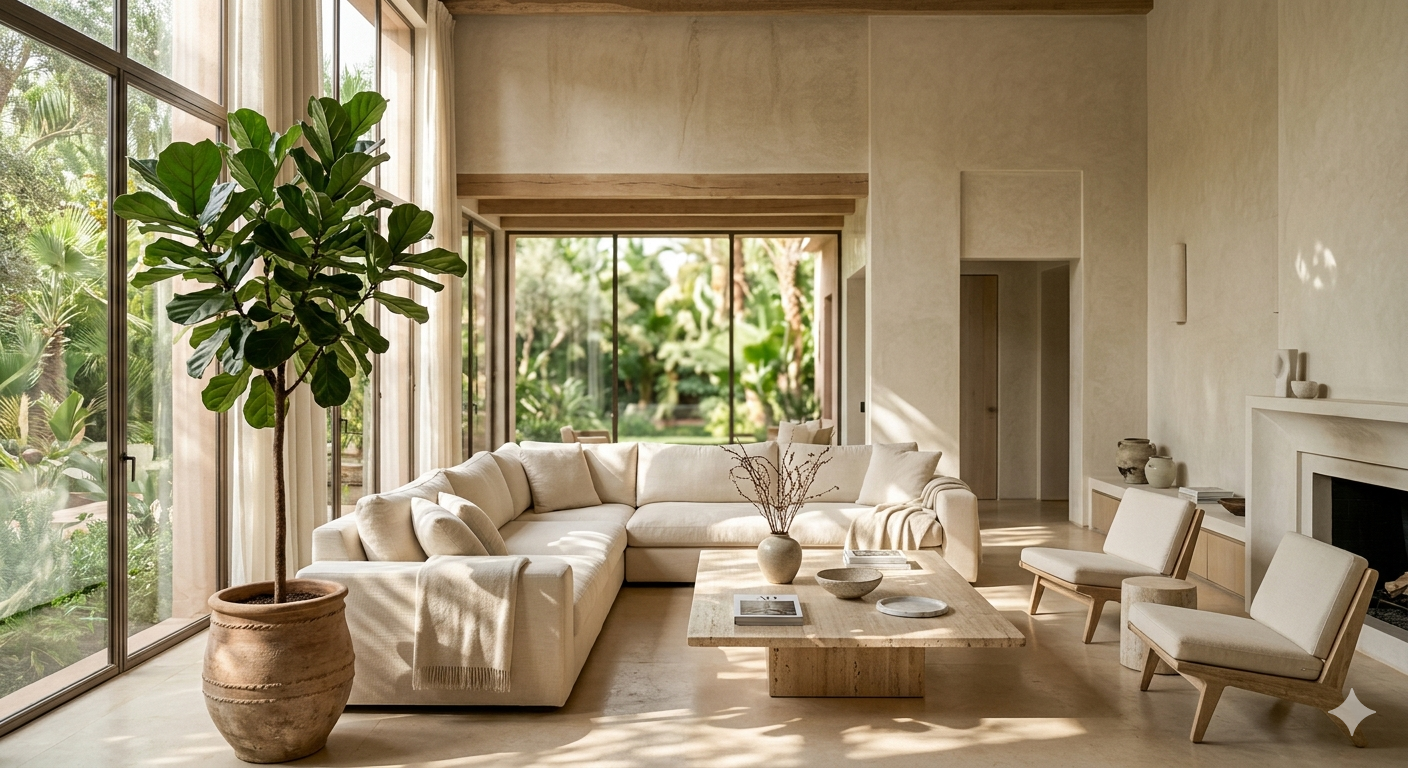
Design Intelligence · Biophilic Design
7 Stunning Biophilic Design Interior Design
Ideas to Transform Your Home (2026)
What if the reason your apartment feels exhausting — not cozy, not calming, just draining — has nothing to do with furniture, paint, or square footage? Biophilic design interior design names the missing ingredient and shows you exactly how to bring it home. No renovations. No landlord approval. No green thumb required.
What Is Biophilic Design Interior Design?
Biophilic design interior design is the practice of reconnecting indoor spaces with the natural world — through living plants, natural light, organic materials, and nature-inspired forms. Rooted in environmental psychology, it reduces stress, sharpens focus, and creates restorative spaces that feel instinctively calm. No renovation required.
The symptoms of a poorly designed apartment and chronic low-level stress are almost identical — fatigue that lingers into the weekend, a restlessness that makes it hard to settle, a vague sense that something in the space is working against you. Biophilic design interior design is the considered, scientifically grounded answer to that absence.
The Environmental Protection Agency estimates that Americans spend around 90% of their lives indoors. But our nervous systems were calibrated over hundreds of thousands of years in open air — reading light shifts, touching uneven surfaces, listening to water, tracking the slow arc of seasons. When none of those inputs arrive, the brain registers something as missing.
The part that changes everything: you don’t need a garden, a large budget, or permission from your landlord. The most effective biophilic design interior design ideas work in any apartment, at any price point, with zero permanent alterations.
“The body does not distinguish between a forest and a room that remembers the forest. It only knows whether it is at rest.”— Veplat Design Intelligence
Why the Science of Biophilic Design Interior Design Matters
Biologist E.O. Wilson coined “biophilia” in 1984 to describe our innate affiliation with other living organisms — a biological inheritance, not a lifestyle trend. Since then, the research has grown increasingly specific: exposure to natural patterns, tactile surfaces, and living elements measurably reduces cortisol, lowers blood pressure, and improves cognitive function.
Physicist Richard Taylor found that the fractal patterns in leaves, bark, and water reduce physiological stress by up to 60%. This is why a linen curtain stirring in a breeze registers so differently from a synthetic blind — your nervous system is running a pattern-recognition programme that predates language. Publications like Architectural Digest have consistently highlighted biophilic design interior design as one of the defining home trends of the decade.
Think about the last space where you felt genuinely at ease. Was there a window? A plant? The sound of rain? It probably wasn’t a coincidence.
If you want to apply these principles beyond the living room, our guide to biophilic bedroom design covers how to create a restorative sleep environment — with specific attention to light, materials, and plant selection for low-light spaces.
For a broader aesthetic direction, our organic modern living room guide shows how these principles translate into a complete, cohesive room.
The 3 Pillars of Biophilic Interior Design
The most widely used biophilic framework — developed by Stephen Kellert at Yale — breaks the practice into three core conditions. Think of them as three questions to ask about any space: Is there anything alive here? Does this material come from the earth? Does the room itself breathe?
Nature in the Space
Direct contact with living things: indoor plants, natural light, water sounds, fresh air, and seasonal change. The most immediate dimension of wellness interior design — and the easiest to introduce in a rental.
Natural Analogues
Materials and forms that evoke nature without being alive: stone, raw linen, aged oak, rattan, organic shapes in furniture, the warm glow of candlelight. These natural textures are the tactile building blocks of a grounded biophilic design interior design.
Nature of the Space
The spatial qualities that feel instinctively comfortable: open views, sheltered corners, layered depth, and a sense of indoor-outdoor flow. It’s why a window seat with a view feels profoundly different from a desk facing a wall.
The spatial dimension of biophilic design interior design overlaps closely with Feng Shui principles — particularly in how both disciplines prioritise the free movement of energy, light, and air through a living space.
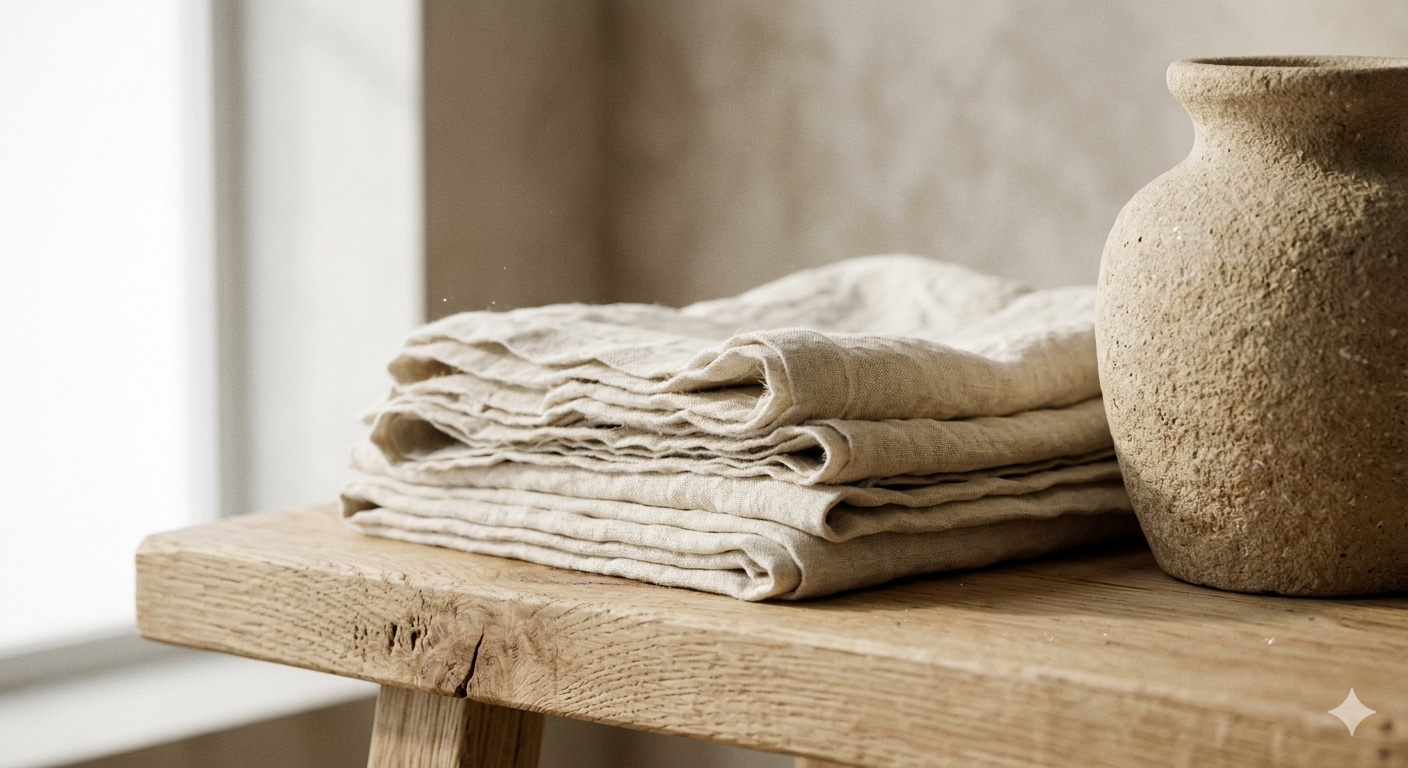
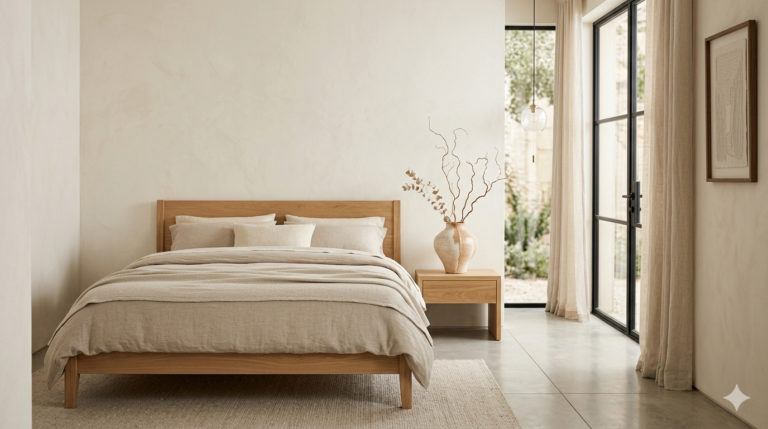
Natural analogues: linen, travertine, rattan — the tactile language of biophilic design interior design
7 Stunning Biophilic Design Interior Design Ideas You Can Try Today
These are the highest-impact changes you can make to any apartment — no contractor, no landlord approval, no significant budget. Each idea addresses one of the three biophilic pillars and is fully reversible on moving day. This is biophilic design interior design made practical.
Tune Your Lighting to the Sun
Swap your bulbs for warm amber (2200–2700K) in the evening and cool daylight (5000K) for your desk lamp in the morning. This is circadian lighting — the most invisible, most effective biophilic upgrade available to any renter. Change the bulbs; change the whole atmosphere.
Add One Statement Plant
A single large plant — a Fiddle Leaf Fig, a Monstera, an Olive tree — placed in a primary sightline does more for a room’s atmosphere than a dozen small pots scattered across surfaces. Position it where your eyes naturally land when you sit. Let it be unmissable.
Switch to Natural Textiles
Replace synthetic throws and cushion covers with raw linen, undyed cotton, or washed wool. Add a jute or sisal rug. These natural textures engage the senses at a level synthetic fabrics simply cannot reach — and they form the foundation of a nature-inspired colour palette that reads as effortlessly calm.
Clear the Window Ledge
Remove everything from your windowsill and reposition your seating to face the window. The most powerful element of biophilic design interior design is already there — it’s the sky. Unblock it. For a full declutter strategy, our guide to smart storage in apartments shows exactly how to clear surfaces without losing your belongings.
Introduce a Water Element
A small tabletop water feature adds the one sensory layer no plant or material can replicate: the sound of moving water. Environmental psychologists consistently rank it among the most reliable stress-reduction stimuli in a domestic space — for reasons that predate interior design by about 200,000 years.
Choose Organic Shapes
Replace one angular object with something carrying a natural curve — a rounded mirror, a pebble-form lamp base, a vessel whose silhouette recalls a seed pod. Biomorphic forms register as instinctively safe to the brain’s pattern-recognition system and soften a room in ways paint colours cannot.
Bring in Stone or Wood
A rough travertine tray, a turned-wood bowl, a slate coaster — small objects that carry the visual and tactile weight of the geological world. Choose one piece and place it where you’ll interact with it daily. Texture experienced through touch is biophilic design interior design at its most direct.
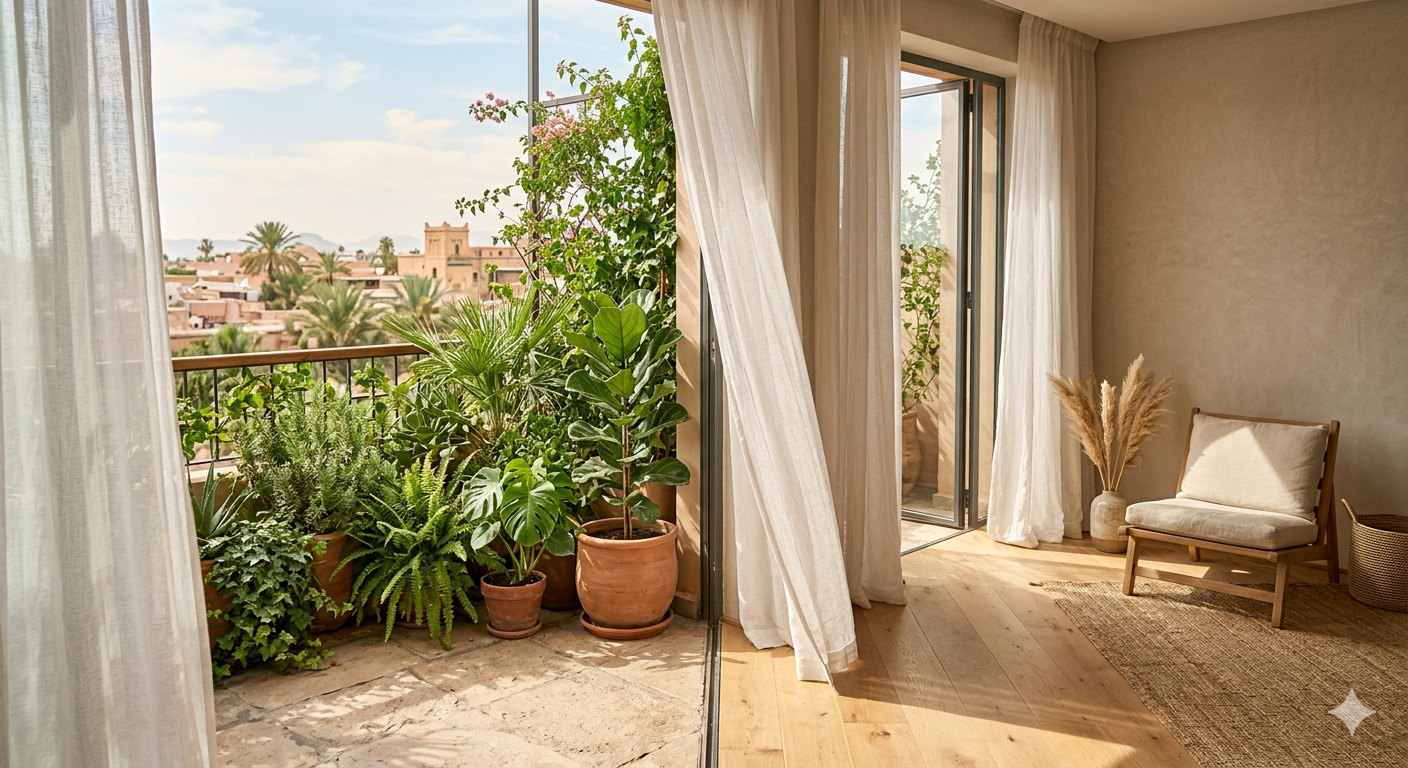
Seven biophilic design interior design ideas applied to a rental apartment — plants, light, natural materials
The Renter’s Rule: Every one of these biophilic design interior design changes is fully reversible. It’s not about altering the structure of a space — it’s about shifting its sensory atmosphere. The deposit is untouched. The experience is entirely different.
Want a curated edit of biophilic objects, plants, and materials sent to your inbox each week?Subscribe to The Veplat Edit →
For a broader framework on transforming a rental without permanent changes, our rental apartment styling tips guide covers room-by-room strategies across lighting, layout, and sustainable home design.
Best Indoor Plants for Biophilic Design Interior Design
Indoor plants are the most direct expression of biophilic design interior design — and the element that shifts a room’s atmosphere most immediately. The goal is not collection; it’s curation. Fewer plants, better placed, better matched to your actual light conditions.
Do you know how much natural light reaches your interior at midday? That single variable determines which plant thrives — and which one slowly declines while you blame yourself.
For a full curation by apartment size and light level, see our guide to the best indoor plants for renters.
| Plant | Best For | Light | Maintenance |
|---|---|---|---|
| Ficus lyrata Fiddle Leaf Fig |
Statement plant, tall vertical scale | Bright indirect | Medium — consistent watering, no drafts |
| Monstera deliciosa | Visual drama, large sculptural leaf texture | Medium–bright indirect | Low — forgiving, grows fast |
| Epipremnum aureum Pothos |
Trailing shelves, low-light rooms | Low to medium | Very low — nearly indestructible |
| Sansevieria Snake Plant |
Bedrooms, dark corners, north-facing flats | Very low | Very low — water once a month |
| Olea europaea Olive Tree |
Mediterranean warmth, sun-drenched rooms | Full sun | Low — drought-tolerant once established |
| Ficus elastica Rubber Plant |
Deep burgundy foliage for moody interiors | Medium indirect | Low — water when top inch dries |
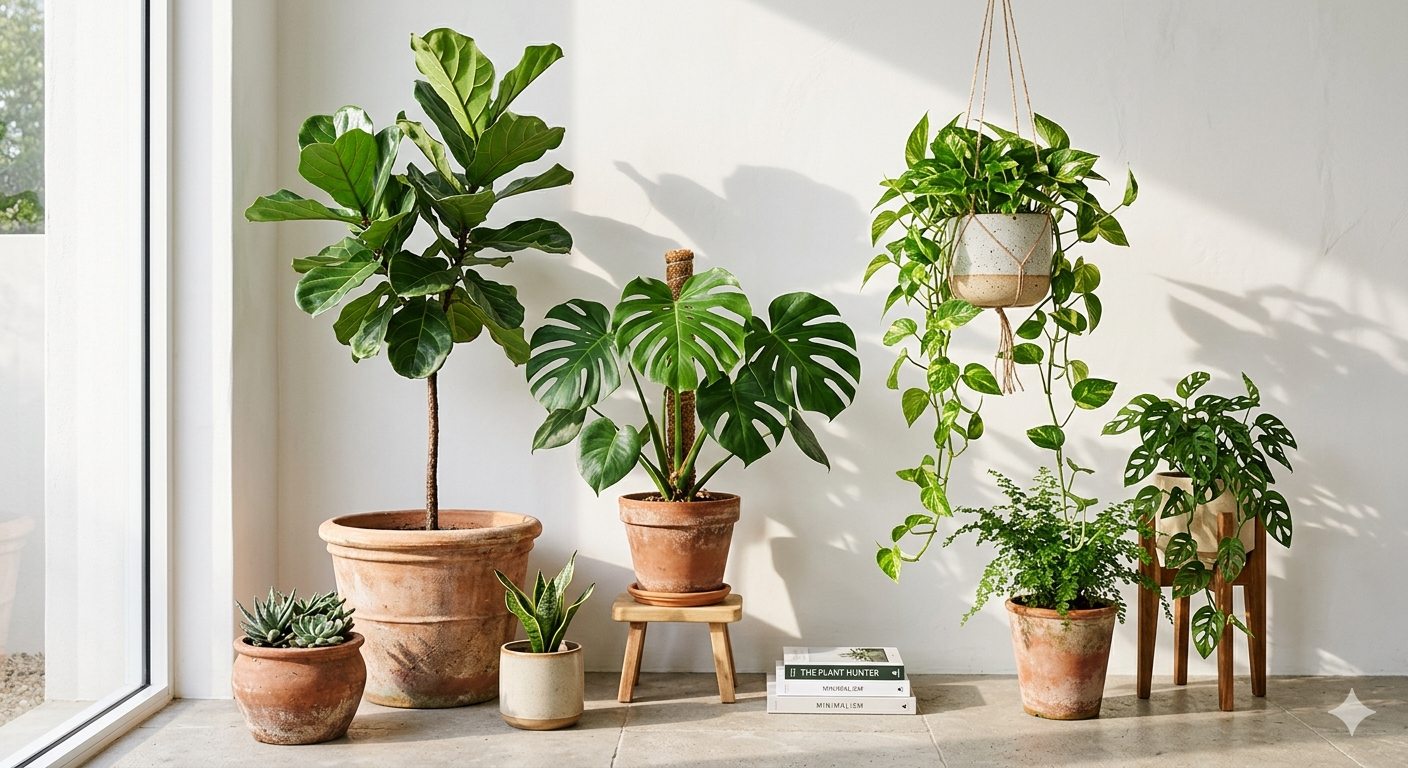
A curated indoor plant selection for biophilic design interior design — scale, texture, placement
The Placement Rule: One plant in a primary sightline is worth five plants in corners. Position your largest specimen where your eyes naturally land — from the sofa, from the desk, from the bed. Visual connection with nature is the mechanism; placement is the only thing that activates it.
Plant selection pairs most powerfully with the right material palette. Our guide to natural textures in interior design covers how to layer stone, linen, wood, and ceramic in a way that amplifies — rather than competes with — your living plants.
Real-Life Biophilic Interior Design Examples (Apartments)
What does biophilic design interior design actually look like — in a 420-square-foot studio, in a north-facing flat, in a rental with builder-grade everything? These four apartment archetypes are practical blueprints with specific interventions and measurable results.
The Condensed Biome
A Monstera at the window. A sisal rug underfoot. Warm 2200K bulbs replacing the building’s cool fluorescents. Three interventions — total transformation. The sightline from the sofa now ends on a living thing, and the room registers as a genuinely restorative space.
The Mediterranean Edit
An Olive tree in the corner. Linen curtains pooling at the floor. A travertine tray carrying a candle and a smooth river stone. The apartment reads warmer, quieter, more considered — without a single piece of furniture changed.
The Indoor-Outdoor Flow
Sheer linen panels left permanently open to a planted terrace. Interior and exterior reading as a single, continuous space. The air moves. The light shifts across the day. This is biophilic design interior design at its most architecturally direct — and it costs nothing but intention.
The Moody Biome
A burgundy Rubber Plant against a deep plaster wall. Amber candles at dusk. A slate bowl holding pebbles and dried moss on the side table. Biophilic design interior design doesn’t require a south-facing window — it requires an earthy aesthetic the senses can settle into.
Common Mistakes to Avoid in Biophilic Design Interior Design
Biophilic design interior design is one of the most effective tools in contemporary interiors — and one of the easiest to misapply. Most mistakes come from doing too much of the wrong things, not too little.
-
Too many plants, too little intention More plants is not more biophilia. Twenty small pots crowding a shelf create clutter, not calm. The brain needs a clear, unobstructed sightline to a living thing. Three well-placed specimens create a space that genuinely breathes.
-
Neglecting light entirely Plants and materials are secondary to light. A space with poor light management will never feel biophilic regardless of how many natural elements it contains. Prioritise the quality and temperature of your light first, then layer everything else.
-
Choosing plants for aesthetics, not placement A Fiddle Leaf Fig is beautiful — but not in a north-facing corner. Match your plant to your actual light conditions first. A thriving Snake Plant in the right spot is more biophilic — and more beautiful — than a struggling Monstera in the wrong one.
-
Mixing too many natural materials at once Rattan plus jute plus raw wood plus linen plus stone in one small room becomes sensory noise — the opposite of what biophilic design interior design creates. Choose two or three materials and let them repeat. Restraint separates a curated interior from a market-stall aesthetic.
-
Treating biophilic design as a one-time project The most effective biophilic design interior design evolves with the seasons — plants moved as light shifts, textiles swapped as temperatures change, lighting adjusted as the days shorten. It is a living practice, not a finished product.
Which of these feels most familiar? Most people find they’ve been making mistake number one — and that undoing it takes less time than they expected.
The Minimalist Edit — Quiet Luxury Biophilic Design Interior Design
There is a version of biophilic design that gets it wrong by doing too much — every surface a growing medium, every shelf a propagation station. This is not nature. It is anxiety with better lighting.
The natural environments our brains find most calming are not dense jungle. They are open savanna with scattered trees, coastal cliffs with wide sky, forest clearings with dappled light. The common quality is not abundance — it is spaciousness. And spaciousness is completely native to nature.
The Quiet Luxury Standard
The quiet luxury approach to biophilic design interior design applies the same discipline to living things as to every other object in the room. The question is never how many plants? — it’s which three, and precisely where?
It’s never more natural material — it’s the single best version of one material at one precise scale. One hand-thrown ceramic planter over six nursery pots. One aged-oak tray over a collection of objects that merely occupy space.
This approach aligns with sustainable home design: buying less, choosing better, investing in objects that age with dignity rather than deteriorate toward replacement. The visual breathing room that biophilic design interior design requires starts with removing what doesn’t belong — before adding anything new.
“A room that contains one extraordinary plant, one source of natural light, and one surface of honest material is already a biophilic interior. Everything else is editorial choice.”— Veplat, The Quiet Luxury Standard
Three Questions Before Adding Anything
Before introducing any new biophilic design interior design element, apply these three tests. They work for plants, objects, and textiles.
- Does it occupy a clear sightline — or does it clutter one?
- Does the space feel better with it present — or simply more full?
- Does it carry an organic form, or is it merely natural in material?
If the answer to any of these is uncertain, the element hasn’t earned its place. Negative space is not absence — it is the room’s capacity to breathe.
For a deeper exploration of this aesthetic, our guide to quiet luxury apartment ideas covers how to apply this discipline to lighting, furniture, and the earthy home aesthetic that ties complete biophilic design interior design together.
Frequently Asked Questions About Biophilic Design Interior Design
What is biophilic design interior design?
Biophilic design interior design is the practice of reconnecting indoor spaces with the natural world through living plants, natural light, organic materials, and nature-inspired forms. Rooted in environmental psychology and evolutionary biology, it measurably reduces stress, improves focus, and creates restorative spaces that feel instinctively calm — with no renovation required.
How do you use biophilic design interior design in an apartment?
Start by maximising natural light — clear the windowsill and face your seating toward the window. Add one large indoor plant in a primary sightline. Replace one synthetic textile with linen or cotton. Change your evening bulbs to warm amber (2200K). These four steps will measurably shift the atmosphere of any apartment with no permanent changes needed.
What are the best plants for biophilic design interior design?
The best indoor plants for biophilic design interior design are: Ficus lyrata (Fiddle Leaf Fig) for tall statement scale in bright rooms; Monstera deliciosa for large leaf texture in medium light; Pothos for trailing shelves in low-light spaces; Snake Plant for bedrooms and dark corners; and Olive tree for sunny rooms with a Mediterranean warmth. Always match your plant to your actual light conditions first.
Why is biophilic design interior design important?
Research shows biophilic design interior design reduces cortisol by up to 60%, lowers blood pressure, and improves cognitive function and mood. Americans spend approximately 90% of their lives indoors. For urban renters in generic, nature-deprived spaces, biophilic design interior design is one of the most direct, evidence-based investments available for daily mental and physical health.
Can renters apply biophilic design interior design without making permanent changes?
Yes. Every core technique in biophilic design interior design is fully reversible — swapping light bulbs, adding indoor plants, introducing linen and wool textiles, clearing windowsills, and bringing in stone or wood objects. No drilling, painting, or landlord approval required. Your deposit is safe.
The Veplat Intelligence
A Weekly Edit on Living with Intention
Biophilic design interior design. Quiet luxury. Spatial intelligence for the urban renter — 2026.
Subscribe to The Edit
One Comment
Comments are closed.