
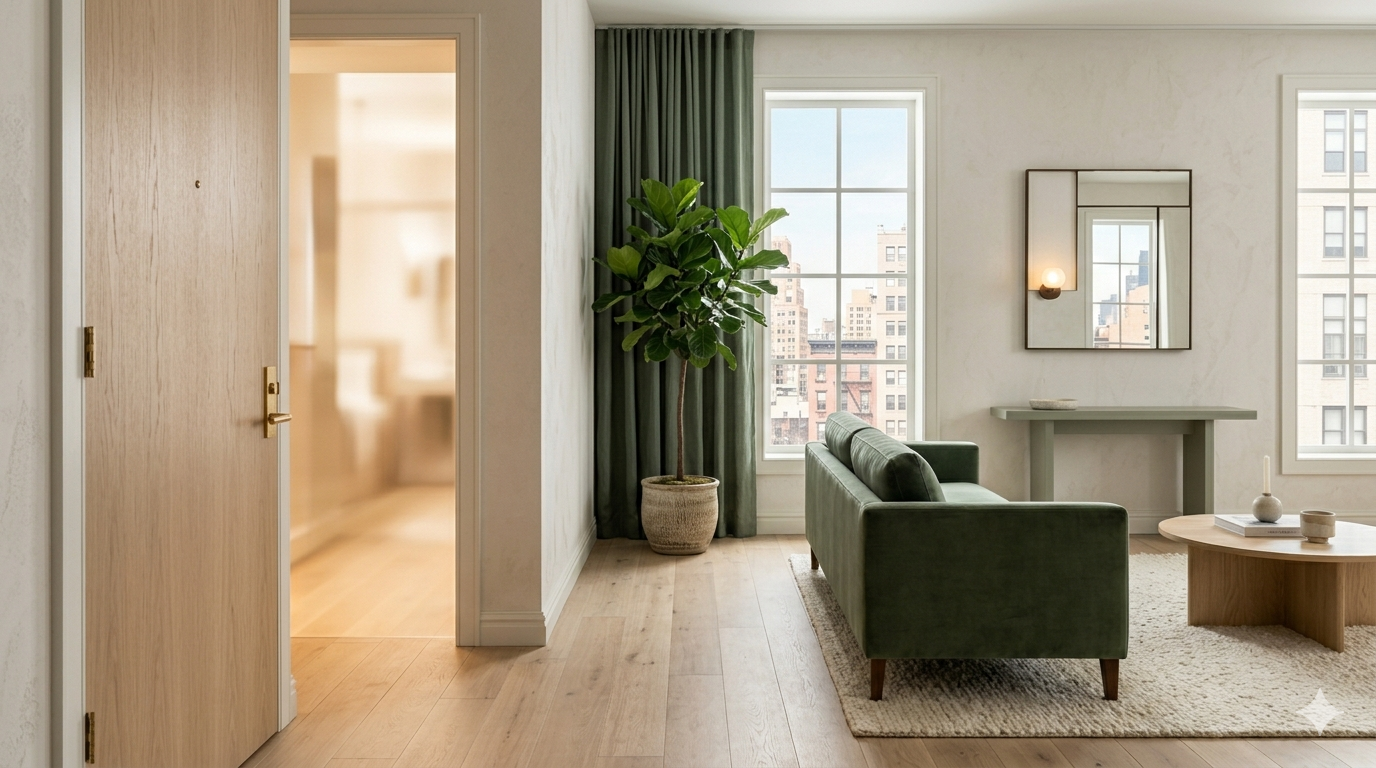
7 Best Front Door Feng Shuifor a Small Living Room LayoutThat Actually Works
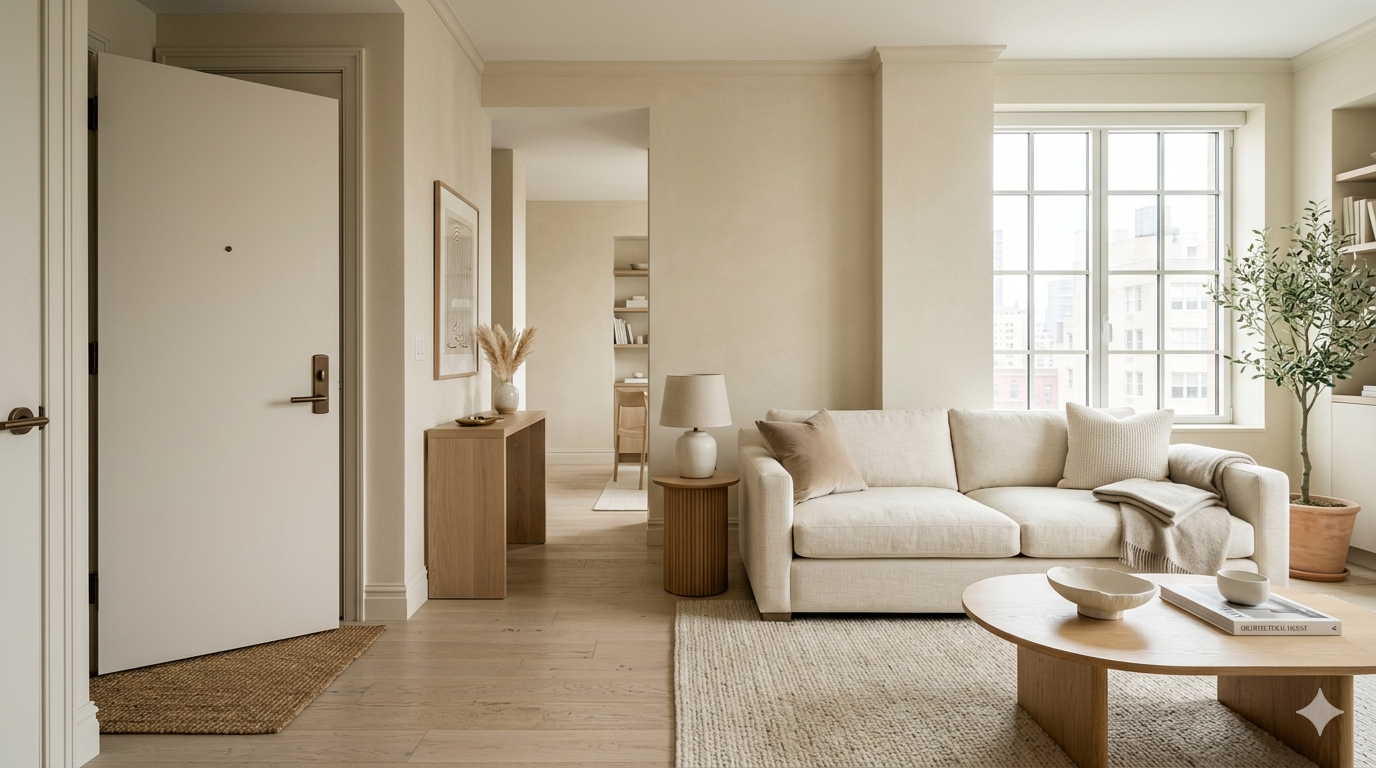
You have 380 square feet, a front door that opens directly into your living room, and a landlord who won’t let you touch the walls. In New York City, the space between your entry and your sofa is not a design afterthought — it is the single most consequential zone in the entire apartment.
Most urban renters treat the threshold as an afterthought. Feng shui — the ancient Chinese spatial philosophy concerned with the movement of chi (life-force energy) through a space — treats it as the mouth of the home. Getting your front door feng shui small living room layout right does not require renovations, consultants, or a belief in the metaphysical. It requires understanding how the eye moves, how energy pools, and how furniture placement shapes the way a room feels the moment you step inside.
At Veplat, we believe spatial intelligence is one of the most underutilised tools in urban rental living — and that feng shui, applied with a minimalist editorial eye, offers a quietly transformative framework for compact spaces. This guide distils those principles into concrete, renter-friendly actions.
The Command Position in Feng Shui — What It Is & Why It Changes Everything
In feng shui, the command position is the spatial arrangement that gives you maximum visual authority over both the room and the front door — without being directly in line with it. It is the first principle any front door feng shui small living room layout must resolve before addressing anything else. For small living rooms where the entry opens straight into the main space, this principle is not merely philosophical; it is the foundation of good furniture layout.
The rule: your primary seating — typically the sofa — should face the front door diagonally, never with its back to it. A sofa that turns away from the entry creates what practitioners call sha chi (cutting or hostile energy), while also producing the practical discomfort of not knowing who has just walked in. In a studio or open-plan apartment, this translates directly into ambient anxiety — a sense that something is slightly off, without being able to name it.
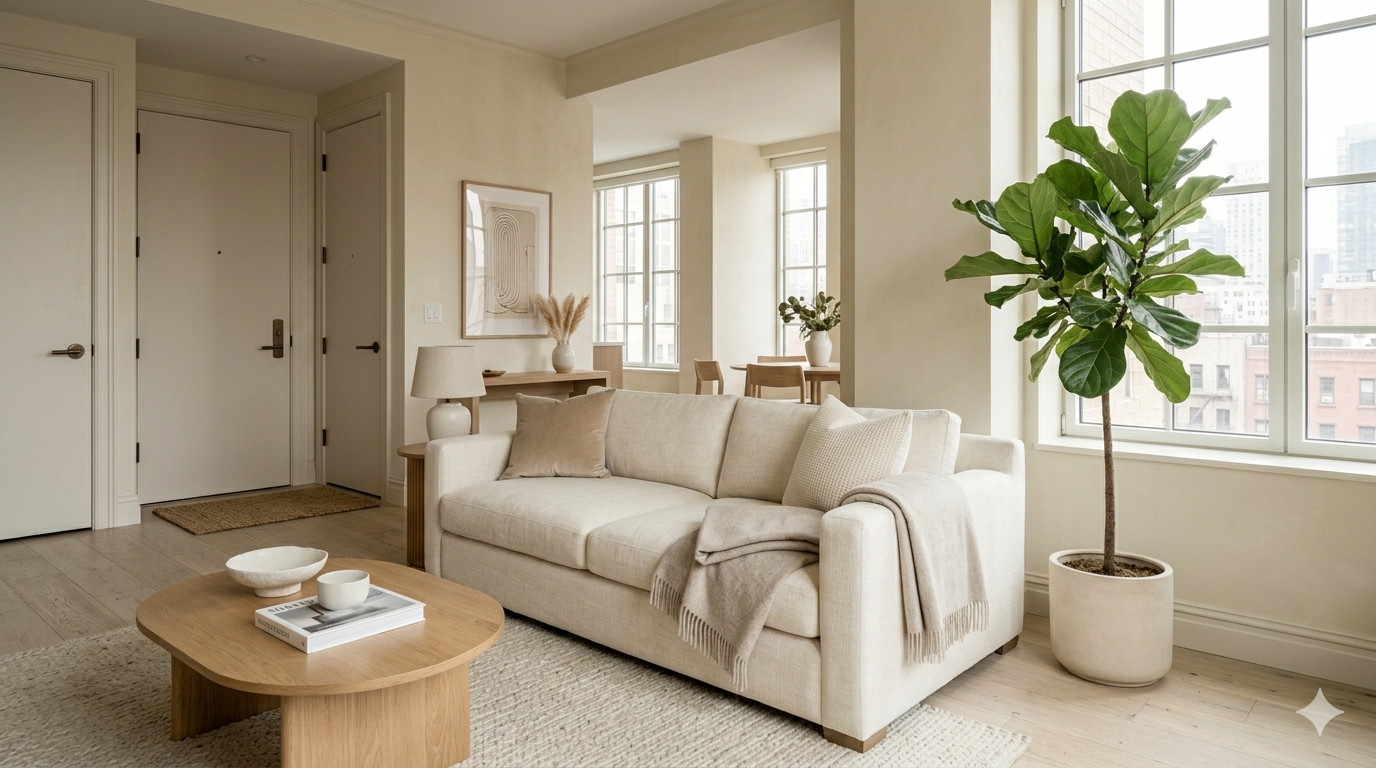
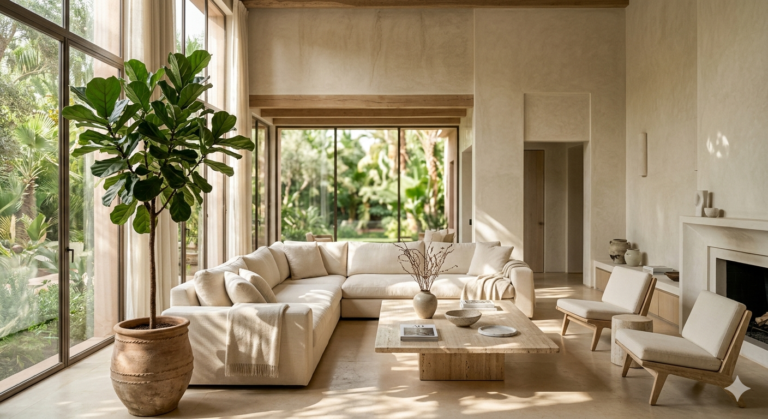
In a compact NYC-style apartment, achieving the command position often means floating the sofa away from the wall — counterintuitive in small spaces, but almost always the correct call. A sofa pulled 12–18 inches from the wall, angled so the occupant faces the door diagonally, opens a circulation path and gives the room a sculptural quality that reads as intentionally designed rather than squeezed in.
Pro Tip
If your floor plan forces the sofa against the wall directly opposite the door, place a low console table or a single architectural plant between the entry and the seating group. This baffles the incoming chi so it meanders rather than rushes — the spatial equivalent of a lobby vestibule.
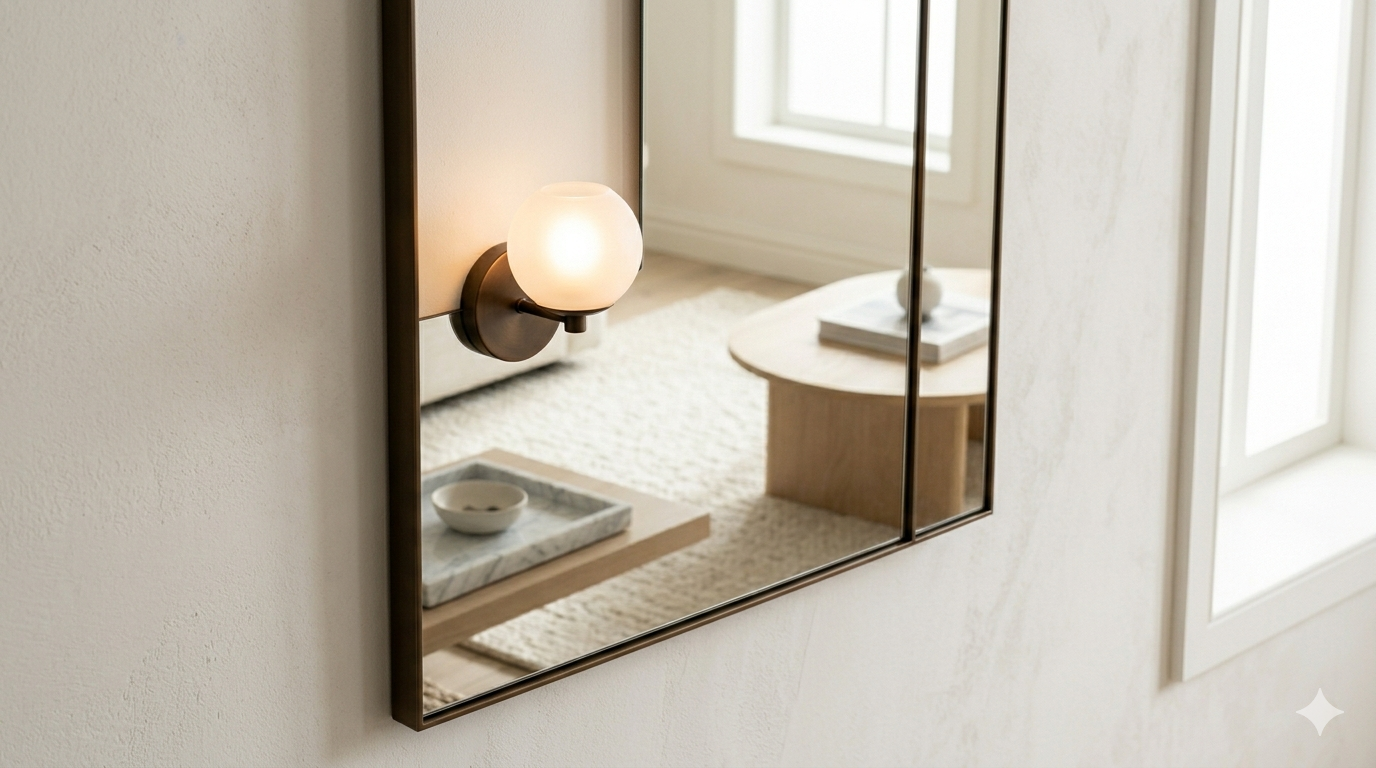
A circular, architecturally framed mirror on the side wall of your entry zone is one of the highest-ROI moves in small apartment feng shui. Round forms diffuse rather than project — ideal for compact layouts where sharp corners compound visual tension.
Shop on Amazon Veplat may earn a commission from qualifying purchases.Layout Mistakes Destroying Your Small Apartment’s Energy Flow
Feng shui and evidence-based interior design agree: most small apartment layouts fail not from a lack of space, but from a handful of repeating errors. Each mistake below is a direct violation of front door feng shui small living room layout principles — and each has a renter-friendly fix.
- Blocking the entry arc. The 90-degree swing path of your front door must remain entirely clear. Furniture within that arc disrupts chi entry and creates daily micro-frustrations that accumulate into a general sense that the apartment is simply too small.
- The furniture island surrounded by dead space. Pushing everything to the perimeter walls leaves a no-man’s-land in the centre. Energy — like conversation — pools where people and objects are grouped, not where they’re absent.
- Misaligned rugs. A rug that is too small floats disconnected beneath the coffee table, visually fracturing the seating zone into fragments. In feng shui terms, it creates energetic “islands” rather than a cohesive field.
- Clutter at the threshold. Shoes, bags, and mail stacked at the front door block incoming chi at its source. A cluttered entry primes the nervous system for disorder before you have taken five steps inside — this is the single most cited feng shui correction for good reason.
- Overhead lighting directly above the sofa. A single harsh ceiling fixture creates sha chi and flattens the atmosphere of the room. Layered, lateral light sources are both better feng shui and better interior design.
The single most effective upgrade for a rental living room suffering from harsh overhead light. An arc lamp introduces warm, lateral illumination at sofa height — replacing sha chi downlight with a pool of atmosphere that transforms the room after dark. No landlord approval required.
Shop on Amazon Veplat may earn a commission from qualifying purchases.“The door is not the beginning of your apartment — it is the first editorial decision your home makes on your behalf.”
Our complete guide to rental-friendly storage hacks covers drill-free solutions for keeping the entryway zone permanently clear. Similar spatial zoning principles apply to our kitchen layout ideas — where threshold flow and room division logic translate directly to galley and open-plan kitchen design.
Pro Tip
The wallet test: stand at your front door and identify the first surface you naturally place things on when you arrive home. That surface is your clutter magnet. Designate it intentionally — a tray, a single hook, a sculptural bowl — so the habit serves the space rather than sabotaging it.
Entryway vs. Living Room Flow — Designing the Transition Zone
In apartments where there is no dedicated foyer, the transition between front door and living room must be designed rather than assumed. Every decision made in this zone — from rug placement to sightline control — is a direct expression of front door feng shui small living room layout thinking. This is the distinction between a space that feels like a home and one that feels like a floor plan.
The goal is to create a perceptual pause — a moment of decompression between the street and the sofa. In larger homes, this is achieved architecturally: a hallway, a vestibule. In a small apartment, it is achieved spatially and materially.
Defining the Entry Zone Without Walls
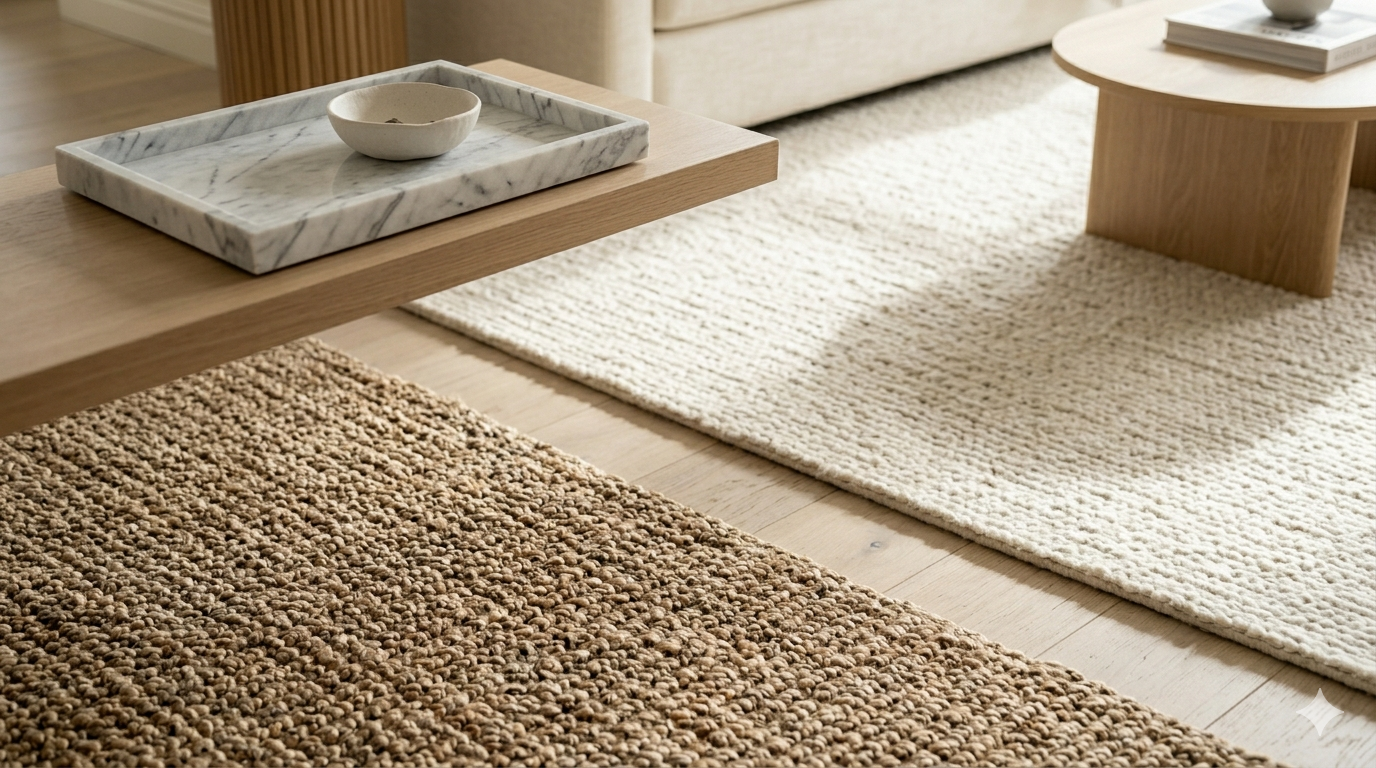
Use a change of material underfoot to signal the transition: a textured runner in jute or a low-pile wool placed just inside the door, stopping before the main living room rug begins. Two distinct rugs, two distinct zones — no construction required. In feng shui terms, this creates a “receiving area” where chi gathers and slows before moving into the room.
A slim entryway console or hall table — no more than 12 inches deep — placed against the wall beside the door (never directly opposite it) performs triple duty: it provides a landing surface, acts as a visual anchor for the entry zone, and introduces verticality that draws the eye upward, making ceilings read as taller.
Controlling the Sightline from the Door
What do you see the moment your door swings open? In feng shui, this first sightline is called the ming tang — the bright hall — and it should be unobstructed, pleasant, and ideally terminate on something beautiful: a piece of art, a mirror, a plant, or a composed vignette. In small apartment layouts, this often means hanging a single significant work of art on the wall directly in the line of sight from the door, framed by deliberate negative space.
Pro Tip
If your apartment has zero visual buffer between the front door and the sofa, a sheer room divider panel on a ceiling-mounted track — renter-friendly and removable — creates the perceptual separation of an entry zone while allowing light to move through freely. Linen and raw silk are the most architecturally neutral choices.
Front Door Feng Shui & Small Living Room Layout: Furniture Placement Principles
The feng shui imperative to place furniture in relation to the front door rather than against walls is, at its core, a circulation principle: the room must breathe. In every front door feng shui small living room layout, this requires precision over excess — fewer pieces, each in its exact correct position.
The Sofa
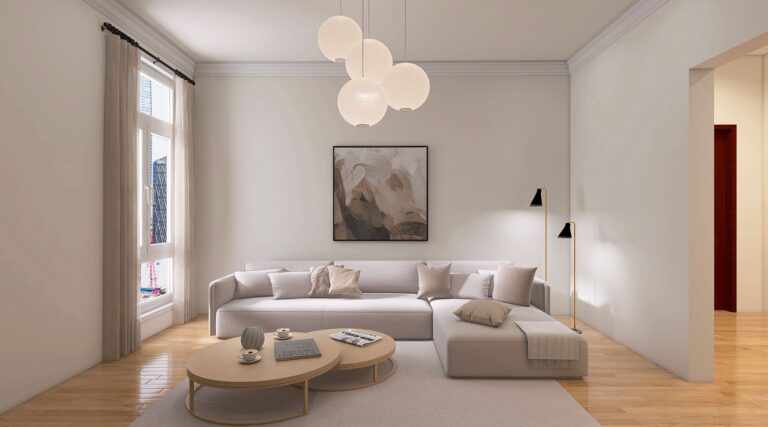
Float it. Pull the sofa at minimum 8 inches from the rear wall — 12–18 inches is ideal. Position it so the occupant’s dominant sightline intersects the front door at a 30–45 degree angle. This satisfies both the feng shui command position and the spatial logic of creating a walkable perimeter behind the seating group.
In studios where the sofa back faces a sleeping zone rather than the door, introduce a low shelf — under 30 inches tall — running along the sofa’s back. This creates a visual “headboard” for the seating group and defines the zone without blocking light or sightlines.
The Coffee Table
Round or oval over rectangular in small spaces: rounder forms allow chi — and people — to circulate around them without the energetic “corners” that sharp-edged tables project into the room. A round table also multiplies viable traffic paths in a compact layout.
Storage & Vertical Emphasis
In feng shui, clutter is compressed chi. In small urban apartments, clutter is also simply everywhere — unless storage is built into the layout deliberately. Rental-friendly vertical storage — floor-to-ceiling open shelving, slim tower units — draws the eye upward and keeps the floor plane clear. For a curated deep-dive on room dividers, shelving systems, and spatial zoning tools for urban renters, explore The Journal.
Pro Tip
Apply the 60-30-10 traffic rule: 60% of the floor plane should remain open walkway, 30% occupied by furniture footprints, 10% by rugs defining seating zones. In a 12 × 14 ft living room, this typically means one sofa, one armchair or chaise, and one table — nothing more.
Mirrors, Rugs & Lighting Near the Front Door
These three elements are the instruments through which feng shui corrections are made in rental apartments where structural changes are off the table. In any front door feng shui small living room layout, mirrors, rugs, and lighting near the entry are the most powerful non-structural levers available — applied with intention, they transform both the energetic and aesthetic character of the space.
Mirrors: Placement, Not Proliferation
The mirror is feng shui’s most discussed tool — and its most misapplied. The principle is not “mirrors make rooms bigger” but rather that mirrors direct chi. A mirror placed directly opposite the front door reflects incoming energy back out of the apartment, creating an odd sense that the apartment rejects rather than receives you.
The correct placement: perpendicular to the door, on a side wall of the entry zone. In a front door feng shui small living room layout, this is where a mirror does its best work — capturing and extending the sightline laterally, amplifying the sense of space without deflecting energy back at the threshold. A tall, architecturally framed mirror (lean it; drilling is optional) in this position is one of the highest-ROI design moves in a small apartment.
Rugs: The Anchoring Field
The entry rug and the living room rug should be distinct objects with visible negative space between them — even 4–6 inches of bare floor as a visual seam. This prevents the two zones from merging into one undifferentiated expanse. In the living room itself, the rug must be large enough that at minimum the front legs of all seating pieces sit on it, anchoring the group without requiring a room-size rug.
For the entry zone, natural fibres — jute, seagrass, sisal — are both practical (durable, easy to replace in a rental) and energetically grounding. In a front door feng shui small living room layout, the entry rug is not a decorative afterthought — it is a zoning instrument. Avoid synthetic pile runners at the threshold; they accumulate static and, aesthetically, signal transience rather than arrival.
Lighting: Layers Over Overhead
A single overhead fixture — the default in most NYC rentals — creates heavy, downward, shadowless light that flattens the room. The solution is layered, portable light: plug-in sconces, floor lamps, and table lamps at different heights to create pools of warm light rather than a single harsh source. For a fully curated guide to renter-friendly fixtures, explore The Journal.
Near the front door specifically, a warm-toned table lamp on the entry console performs two functions: it creates a welcoming illuminated vignette visible from the door (drawing chi inward) and eliminates the experience of entering a dark apartment. In any front door feng shui small living room layout, this lamp is the lowest-cost, highest-impact intervention available. In winter-light cities like New York, this is as much a wellness intervention as a design decision.
For a comprehensive resource on spatial design, quiet luxury styling, and urban rental living in small spaces, visit Veplat.com and browse the full archive in The Journal.
Pro Tip
Bulb temperature matters more than most renters realise. At the entry, use 2,700K–3,000K bulbs (warm white). Daylight-spectrum bulbs (5,000K+) at the threshold create a clinical, alert quality that works against the decompressive function of the entry zone. Warmth signals arrival; cool light signals task performance.
Frequently Asked Questions
The most direct answers to common questions on chi flow, command position, and front door feng shui small living room layout practice for urban renters.
What is the best front door feng shui for a small living room layout?
The most impactful correction is placing your primary sofa in the command position — facing the front door diagonally rather than directly or with its back to the entry. Additionally, keep the door’s swing arc completely clear, define the entry zone with a separate rug or material change, and place a warm light source near the threshold to draw chi inward. These three adjustments address the majority of energy-flow issues in open-plan small apartments.
Should a mirror face the front door in feng shui?
No. A mirror placed directly opposite the front door reflects incoming chi back out of the space, which is considered inauspicious. The correct placement is perpendicular to the door, on a side wall of the entry zone, where the mirror amplifies the lateral sightline without deflecting energy back at the threshold.
How do I improve chi flow in a small NYC apartment without renovating?
Focus on three renter-friendly interventions: (1) Clear the entry threshold of all clutter — this is the highest-impact single action. (2) Float your sofa away from the wall and orient it toward the front door at an angle. (3) Layer warm lighting at the entry rather than relying on a single overhead fixture. These changes require no drilling, no landlord approval, and no structural alteration.
What entryway furniture works in a small apartment with no foyer?
A slim console table (10–12 inches deep) on the wall beside — not opposite — the front door is the most versatile solution. Pair it with a single wall hook above, a tray or bowl for keys, and a warm lamp. This creates a functional landing zone that also defines the entry visually, without occupying significant floor space. An upholstered bench with concealed storage beneath keeps the entry clear while adding practical seating.
What rug size should I use in a small living room for good feng shui?
The rug should be large enough that the front legs of all seating pieces rest on it — typically an 8×10 ft rug in a standard NYC living room. Going smaller creates a floating, disconnected effect that fragments the seating zone energetically and visually. If budget constrains rug size, choose one large rug over two smaller ones; two rugs in a small space create visual competition rather than cohesion.
Is feng shui relevant in a modern minimalist apartment?
Yes — and arguably more so. Minimalist design and feng shui share a foundational premise: the quality of a space is determined by what is absent as much as what is present. A considered front door feng shui small living room layout is, at its core, a minimalist exercise — both traditions prioritise unobstructed circulation, intentional object placement, natural materials, and the psychological impact of order. Applying feng shui in a minimalist apartment is not a contradiction — it is a refinement.
One Comment
Comments are closed.