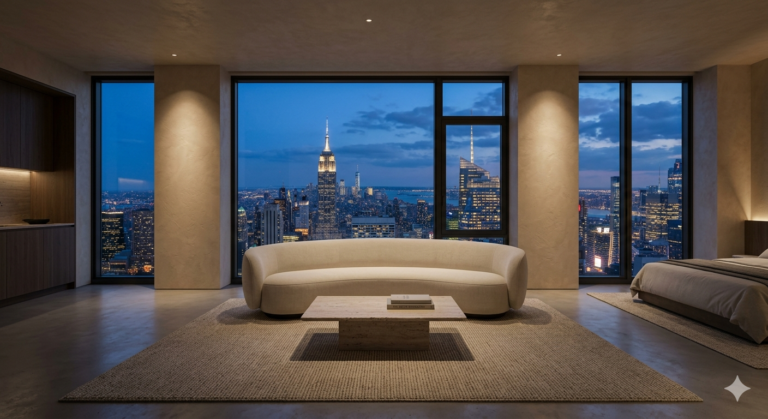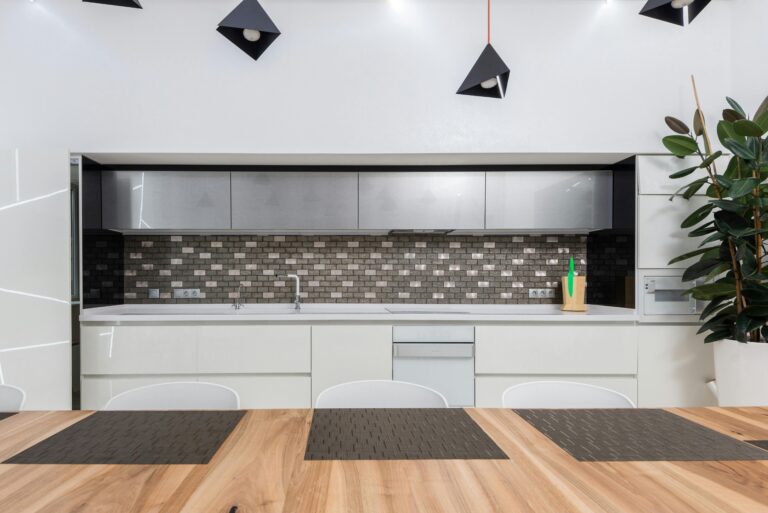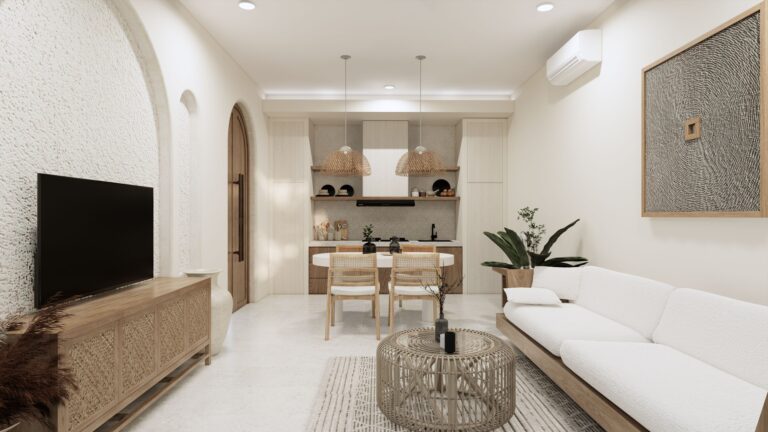

Renter-Friendly Lighting NYC: The Plug-In Sconce Guide You’ve Been Waiting For
By the Veplat Editors · New York City · Spring 2026

You’ve just finished a ten-hour shift. The subway ride home was fluorescent-lit and airless, and the only thing carrying you through the last three stops was the thought of walking into your own space. Then you open the door — and flick on the overhead light.
That single bare bulb, or the builder-grade flush mount casting its blue-white glare across the ceiling, does something quietly cruel. It doesn’t welcome you. It interrogates you. The hum of the fridge fills the room. The space looks smaller than you left it. The whole apartment has the energy of a waiting room with worse magazines.
This is the unspoken grievance of renter-friendly lighting NYC apartments have forced on an entire generation of residents. And unlike a leaky faucet or a broken radiator, lighting is considered aesthetic, not structural. Which means your landlord isn’t coming to fix it. You are — and here’s exactly how.
The “Deposit-Risk” Struggle: Why Lighting in NYC Is So Hard
Let’s be direct about what we’re dealing with. New York City’s rental stock is among the most lighting-hostile residential environments in the country. Pre-war buildings — the backbone of the city’s apartment supply — were designed before centralized overhead lighting was standard. Bedrooms relied on table lamps. Living rooms relied on floor lamps. Ceiling fixtures were optional, and in many cases, they simply weren’t there.
Then the buildings aged, landlords inherited them, and nothing changed. You can sign a lease on a $3,400/month one-bedroom in Crown Heights and discover the “lighting” is a single junction box that requires you to supply your own fixture — if the junction box is even there at all.
- Pre-war buildings (pre-1940) commonly lack hardwired ceiling fixtures in bedrooms and living rooms — by design, not neglect.
- Standard NYC residential leases prohibit drilling into walls or ceilings without written landlord consent, consent that is almost never granted.
- Small footprints — the city average hovers around 400 to 700 square feet — mean a single overhead source creates flat, shadowless light that visually collapses the space.
- Even when ceiling fixtures exist, builder-grade installations optimize for durability over aesthetics, producing light that feels institutional rather than residential.
“Take it from a former walk-up resident in Astoria: the worst lighting decision I ever made was buying a set of adhesive puck lights — eleven dollars for a pack of six. They looked fine for exactly three weeks. Then one fell off the wall at 3 AM while I was asleep, taking a chunk of paint with it and landing directly on my phone charger. I replaced them all with a single plug-in sconce the following weekend. I’ve never gone back.”
Before touching any wall, photograph the space in full — every angle, every outlet location. Timestamped move-in photos are your single best protection against unfair deposit deductions. Document first, install second.
Why Plug-In Sconces? The Beauty of No-Drill Solutions
Here’s the thing about no-drill wall lighting for apartments: the category has quietly matured into something genuinely beautiful. Five years ago, “plug-in sconce” meant a renter’s compromise — something functional but aesthetically apologetic. That’s no longer true.
Today’s best plug-in sconces are designed with the renter explicitly in mind. They’re proportioned for low ceilings and tight floorplans. They come with fabric cords in natural linens, braided blacks, and aged whites. The mounting hardware leaves minimal trace. And the designs themselves — unlacquered brass, hand-thrown ceramic, seeded glass, woven rattan — are what you’d find in a Williamsburg boutique hotel.
More practically, wall-mounted sconces do something that floor lamps and overhead fixtures cannot: they layer light. Ambient from the ceiling, task from the desk, and accent from the wall — that combination is how professionally designed interiors achieve the warmth and depth that makes a 450-square-foot studio feel curated rather than cramped.
- No wiring. Standard wall outlet. Installation in under twenty minutes, no professional required.
- No structural damage. Single anchor screw or heavy-duty adhesive strips — walls remain intact at move-out.
- Floor space reclaimed. A sconce replaces a floor lamp entirely, returning square footage to the room.
- Design credibility. Today’s plug-in sconces are designed objects, not workarounds. They hold their own on any interior design mood board.
For more on how light interacts with small-space layouts, our guide to small NYC living room ideas covers how sconce placement works alongside furniture arrangement to visually expand the room.
Always pair your plug-in sconce with a smart plug — the kind controllable by app or voice. It eliminates the need to reach for a cord switch in the dark and allows you to set lighting schedules that make your apartment feel lived-in even when you’re not home.
Linen vs. Brass: A Detailed Comparison of Ambiance
The two dominant aesthetics in plug-in sconce design — linen shades and exposed brass hardware — aren’t just stylistic preferences. They produce meaningfully different qualities of light, suit different room typologies, and communicate different things about the interior they inhabit. Understanding the difference is the fastest way to make the right choice for your specific apartment.
| Attribute | Linen Shade Sconce | Exposed Brass Sconce |
|---|---|---|
| Light Quality | Diffused, soft, omnidirectional — the shade wraps the bulb entirely and filters the light into a warm amber glow. | Direct, focused, architectural — light projects from an open socket or globe, creating contrast between bright zones and shadow. |
| Best Room | Bedroom, living area, reading nook — anywhere warmth and comfort are the priority. | Entryway, study, dining area — anywhere visual drama or task clarity is the goal. |
| Wall Impact | Minimal. The shade draws attention away from the wall and toward the light source itself. | Significant. Bare hardware reflects light onto adjacent wall surfaces, creating ambient glow and shadow play. |
| Rental Context | Universally compatible — coordinates with nearly any wall color, from builder white to warm greige. | Works best against white, off-white, or dark walls; less effective against warm-toned mid-tones where the brass can read as busy. |
| Cord Visibility | Fabric cord in linen or cream blends naturally; minimal cord management required. | Braided cord in black or bronze reads as intentional; benefits from deliberate styling or concealment. |
| Investment Range | $45 – $180. Wide range; quality is determined primarily by shade material and socket finish. | $60 – $280. Hardware quality is immediately visible — thin plating reads cheap; solid brass reads expensive. |
| Verdict | The safer, more versatile starting point for most NYC rentals. Start here if uncertain. | The higher-impact choice for renters comfortable with bolder design decisions. |
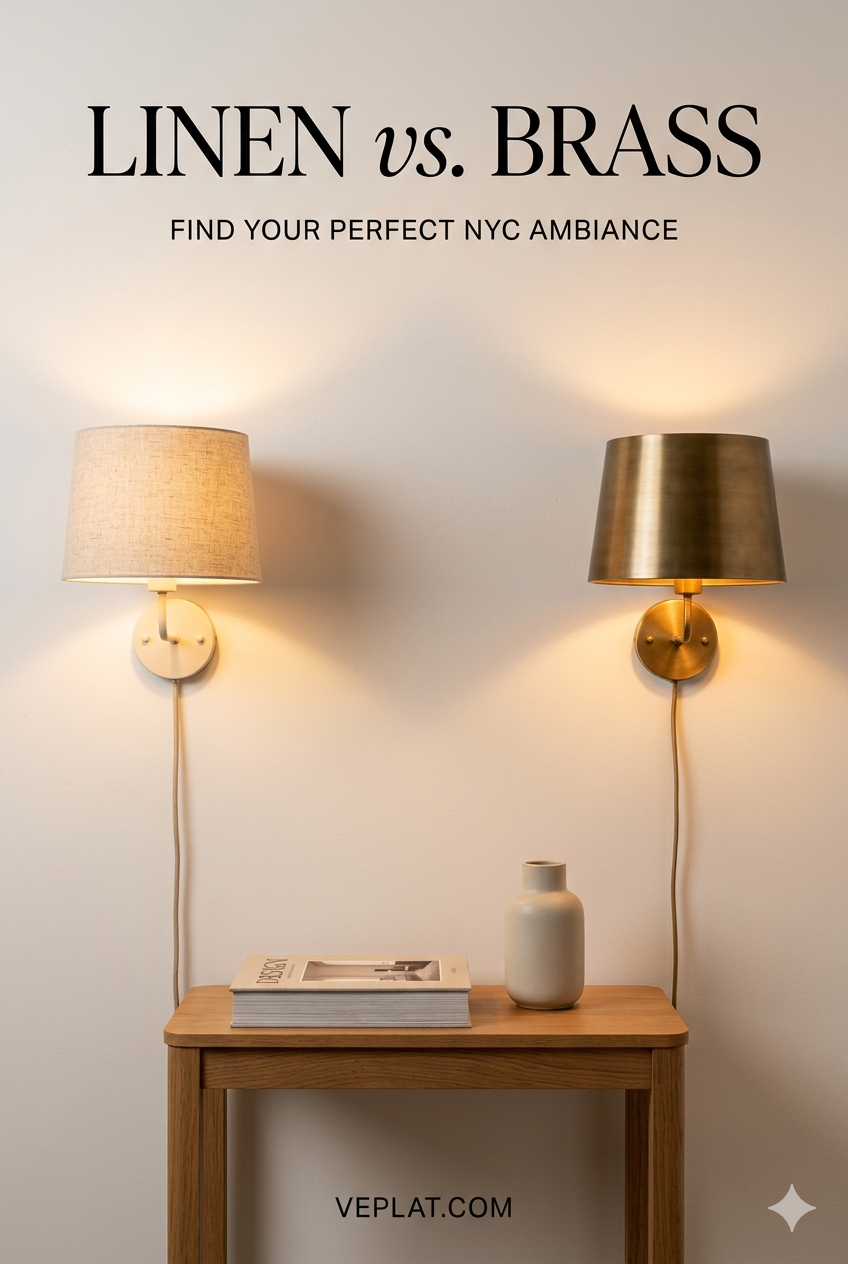
“Linen gives you warmth. Brass gives you character. In a 400-square-foot apartment, you usually need both — which is why the best sconce collections offer exactly that combination in a single fixture.”
The most effective combination in a small apartment: a linen sconce beside the bed for warmth and a brass sconce near the entry for arrival impact. Two fixtures, two functions, total transformation — and the whole setup costs less than one month’s ConEd bill.
The Best Plug-In Wall Sconces for NYC Rentals, Ranked
These picks were selected for light output quality, installation simplicity, cord management compatibility, and the kind of visual design that holds up in New York City apartments — which is to say, spaces where every object is scrutinized from three feet away because there’s nowhere else to stand.
The quiet classic. A natural linen shade over a brushed brass socket produces diffused amber light that makes any NYC bedroom feel warm rather than merely lit. The fabric cord in cream reads as a design choice rather than a compromise. Mount with a single anchor screw or 10-lb adhesive strip. Buy two and flank the bed — it’s the closest thing to a cost-free renovation this category offers.
Spare, architectural, uncompromising. A downward-facing cone directs light precisely — ideal above a reading chair or beside a desk in a studio where the bedroom and workspace share the same twelve square feet. Projects roughly four inches from the wall. A braided black cord in a matching channel disappears against dark paint entirely.
In a 380-square-foot studio, the bedside table either doesn’t exist or holds exactly one thing. A swing arm sconce eliminates the bedside lamp entirely — freeing the surface, the outlet, and the floor footprint that a lamp base would occupy. Extends for reading, swings flat when not in use. Non-negotiable detail: on-cord switch, not fixture switch. At 11 PM with the lights already off, you’ll understand why.
One fixture that accomplishes what a hundred design decisions try to: it makes the apartment look like someone lives there with intention. Ribbed glass scatters light into prismatic patterns across ceiling and adjacent walls. Positioned beside a mirror or above a console table, a single globe sconce creates the visual anchor that transforms a transient rental into a considered interior.
For renters whose leases read like military contracts — no screws, no adhesive, no modifications of any kind — rechargeable battery sconces have finally caught up to wired quality. Current top options run 8 to 12 hours per charge, include stepless dimming, and mount with removable gel pads leaving zero residue. For accent and mood sources in windowless hallways or above bookshelves, they perform where nothing else is permitted.
NYC apartments run short on organic material — concrete, steel, glass, and painted drywall define most rental surfaces. A woven rattan sconce introduces the kind of natural texture that makes a space breathe. The weave diffuses light while projecting intricate shadow patterns onto flat white walls. Light enough to mount securely on adhesive strips alone — the most installation-friendly option on this list.
Step-by-Step Installation: How to Hide Cords Like a Pro
The installation process intimidates renters far more than it should. A single plug-in sconce can be mounted, cabled, and operational in under twenty minutes. The preparation is where the real work happens — and it’s mostly planning, not labor.
The Renter-Friendly Lighting NYC Installation Method
Photograph everything first. Before touching a wall, document every surface, every outlet position, every existing mark. Timestamped photos are your deposit insurance.
Choose wall and height precisely before committing. Hold the sconce in position and mark lightly with a soft pencil. Standard sconce height is 60 to 66 inches from the floor — but in NYC apartments with 8.5-foot ceilings, 54 to 58 inches often reads better proportionally.
Select your mounting method. A single small screw into a wall anchor causes minimal damage — most landlords treat this as normal wear. If your lease prohibits all penetration, heavy-duty adhesive strips rated 12 to 15 lbs, applied to a clean dry surface and cured for one full hour, hold most sconces securely.
Plan the cord route before mounting. Decide whether the cord drops directly to an outlet, runs along the baseboard in a channel, or routes behind furniture. Changing course after mounting is both frustrating and sometimes impossible.
Mount the bracket and hang the fixture. Most plug-in models use a simple keyhole or hook bracket — follow the manufacturer’s instructions. The sconce should hang flush, with no visible gap between mounting plate and wall surface.
Apply cord channels or raceways. Adhesive cord raceways in white, beige, and matte black are available at any hardware store. Press firmly at every adhesive point before routing the cord. A braided fabric cord in a complementary color can also be left deliberately visible — coiled on a shelf, pinned along a bookcase — and reads as intentional in the right context.
Select the correct bulb — this matters more than most people realize. Always use a warm white LED at 2700K to 3000K for ambient sconces. A 4000K bulb in a bedroom sconce produces a clinical flatness that no linen shade can correct. Color temperature is the difference between ambiance and illumination.
Route the cord along the inside edge of a baseboard, secured with small adhesive clips spaced every 8 to 10 inches. Paint the raceway to match the wall. The result is genuinely invisible — guests will assume the sconce is hardwired. This technique costs under $15 in materials and under 30 minutes in labor.
The Final Transformation: A Hotel-Suite Vibe in 400 Sq Ft
The goal of Rental Alchemy has always been a specific one: to make a temporary space feel permanent, considered, and genuinely worth coming home to. Lighting is the fastest and most dramatic lever available to achieve this — faster than new furniture, faster than art, faster than any other single change you can make in a rental.
Here’s what changes when you replace an overhead-only lighting setup with a layered sconce system — documented as a before-and-after that plays out in apartments across the city every week.
- Single overhead source casting flat shadowless light
- Room looks smaller than its actual dimensions
- Walls appear bare and institutional
- No visual distinction between zones
- Cold color temperature makes skin and surfaces look drained
- The apartment feels temporary by design
- Layered light at eye level adds warmth and depth
- Room reads as larger — lit corners expand perceived space
- Walls carry shadow patterns and reflected glow
- Zones are defined by light, not furniture arrangement
- Warm white temperature makes every surface feel lived-in
- The apartment feels chosen, not assigned
For renters navigating more complex spatial challenges — studios where a sleeping area, living room, and workspace must coexist — our piece on luxury studio partitioning covers how light zoning works alongside physical partition strategies to create genuine room separation without walls.
“You don’t need ownership to make a space feel like yours. You need light, texture, and the conviction that temporary doesn’t have to mean provisional.”
The Three-Sconce Formula for Any NYC Studio
- Bedside: One linen or swing-arm sconce at 54 inches, beside the head of the bed. This is your anchor — the first light on in the morning, the last one off at night.
- Living zone: One statement sconce — globe, rattan, or brass arm — positioned beside or above the main seating area, paired with a large mirror opposite to double its apparent brightness.
- Entry: One compact half-moon or slim profile sconce at shoulder height. This is the first light you see when you walk in. It sets the entire tone for what follows.
Position a leaning floor mirror directly opposite your living-zone sconce. The reflected light reads as a second source, visually doubling the depth of the room. In a studio where east-to-west depth is under 15 feet, this single placement adds a perceived 6 to 8 feet of space. Cost: zero additional fixtures.
Common Mistakes That Undo Good Sconce Choices
Avoid These
- Mounting too high. Sconces placed above 68 inches in a standard NYC apartment feel disconnected — hovering near the ceiling with no relationship to furniture or human scale. Lower is almost always better. Light at eye level creates intimacy; light near the ceiling in a low-ceilinged room just creates glare.
- Adding too many fixtures at once. The instinct in a dim apartment is to add as much light as possible, as fast as possible. Resist it. Three layered sources — ambient, task, and accent — outperform six competing fixtures every time. Start with one sconce and live with it for a week before adding another.
- Ignoring cord management from the start. A beautiful sconce with a cord dangling freely down a white wall reads as unfinished. Cord management is part of the installation, not a cosmetic afterthought. Budget thirty minutes and a few dollars for adhesive raceways before considering the project done.
- Choosing the wrong bulb shape. Globe bulbs (G25) in a directional cone scatter light in all directions and cut the fixture’s efficacy by half. Match bulb form to fixture intent: candelabra for open arms, A19 for enclosed shades, G25 only for fixtures specifically designed to showcase the bare bulb.
- Ignoring outlet proximity before committing to a wall position. Always verify outlet locations before committing to placement. A sconce mounted six feet from the nearest outlet requires a long exposed cord or a hidden extension — neither reads as intentional. Plan around available power, not the other way around.
- Using the wrong color temperature. A 4000K “cool white” bulb in a linen bedroom sconce will undermine every other design decision you’ve made. Always use 2700K to 3000K for ambient and accent sconces. It is the single most impactful one-dollar decision in lighting.
More Rental Alchemy, Every Week
Every issue of The Journal delivers one high-quality insight for renters who take their space seriously — hardware, fixtures, light, texture, spatial strategy. No filler. No affiliate noise. Just the kind of considered, practical guidance that turns any apartment, however temporary, into somewhere worth living.
New issue every Thursday. Unsubscribe anytime. Your security deposit is safe with us.
Joining thousands of NYC renters practicing quiet luxury. No spam, ever.