Feng Shui Bedroom Layout: Where to Put Your Bed, Even in a Tiny Room
Feng Shui Bedroom Layout: Where to Put Your Bed, Even in a Tiny Room
The right feng shui bedroom layout starts with where the bed goes. Here is how to get it right, even when the room is small, odd-shaped, or rented.
By the Veplat Editorial Desk
You know the feeling of stepping into a good hotel room and exhaling without knowing why. The bed sits where it should. Nothing looms. The door is in view, the light is low and warm, and your shoulders drop an inch. That is not luck. It is layout.
A bedroom is the one room where you are unconscious and unguarded for seven or eight hours a night, and your nervous system knows it. Feng shui, the Chinese practice of arranging space to support the flow of qi, begins with that plain fact: a body that feels protected sleeps deeper, and a body that sleeps deeper meets the day, and the people in it, with more patience.
The good news, especially if you rent: you rarely need to move a wall. A strong feng shui bedroom layout comes down to where the bed sits, what it faces, and what hangs over it or hides beneath it. Everything else is refinement.
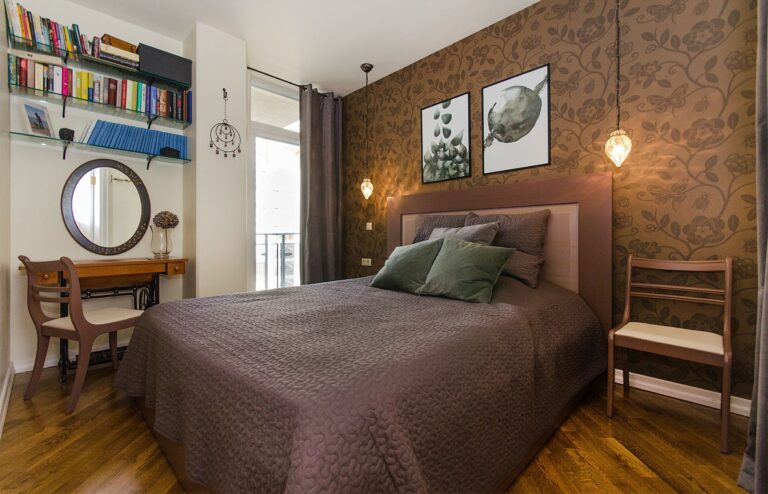
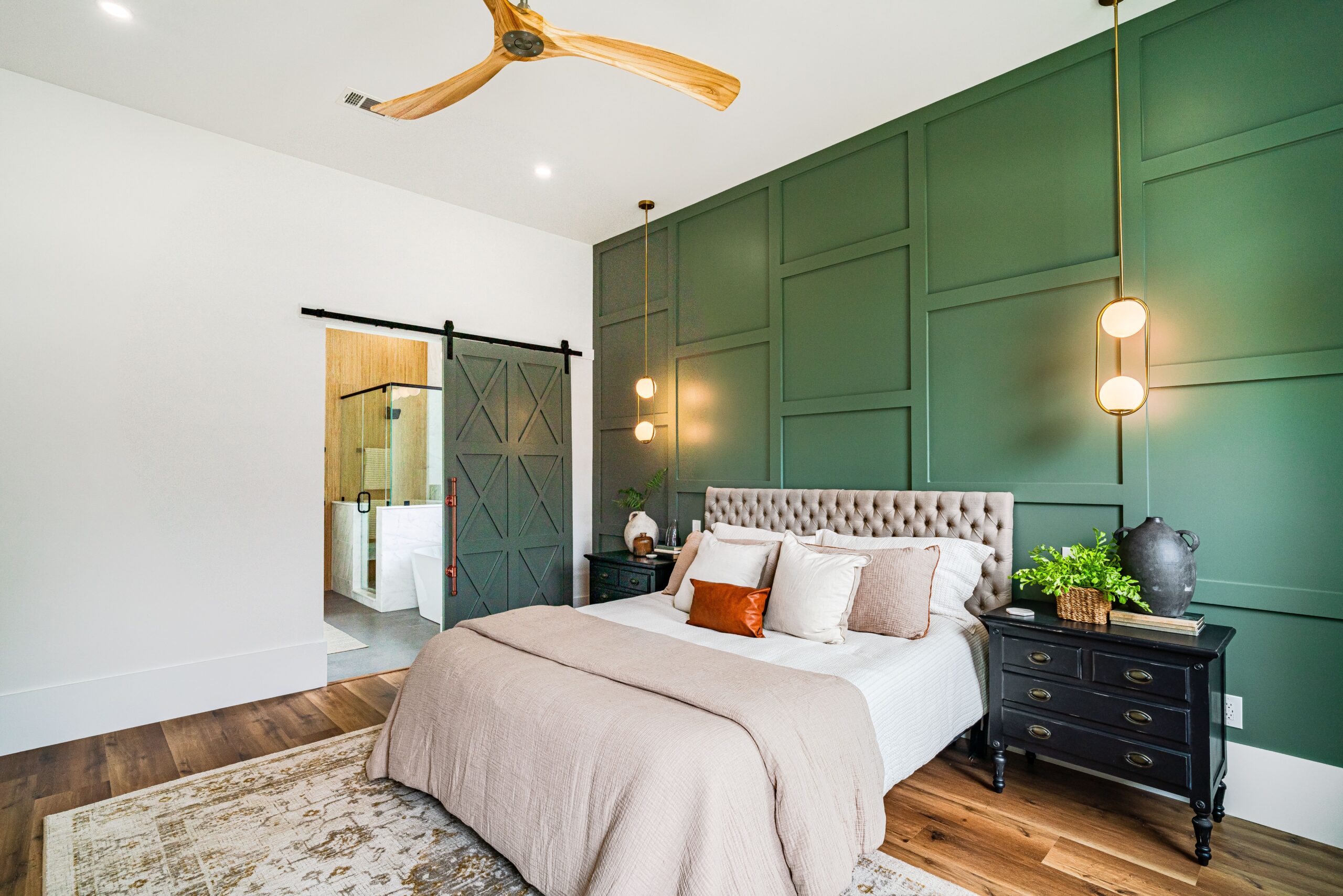
The best feng shui bedroom layout places the bed in the command position: diagonal from the door, with a clear view of it, and the headboard against a solid wall. Keep the bed out of line with the door, away from windows, and flanked by two open sides. Keep the room uncluttered, softly lit, and free of electronics near your head.
How to Place Your Bed in 5 Steps
Standing in the room right now? Work through these feng shui bedroom layout steps in order. Each step is explained in detail below, and our feng shui bed placement guide goes deeper on the bed alone.
- Choose the solid wall. Pick the wall without a window, ideally the one farthest from the door, for the headboard.
- Set the diagonal. Slide the bed until you can see the door from your pillow without the foot of the bed pointing at it.
- Open both sides. Leave room to step out on each side if you share the bed, or at least one open side if you sleep solo.
- Anchor the bed. Add a solid, stable headboard and balanced nightstands, so the bed feels supported from every angle.
- Clear the sightline. Cover mirrors that face the bed, move work gear out of view, and empty the space under the bed.
The Feng Shui Bedroom Layout Foundation: Bed Placement and the Command Position
What the command position actually is
Every feng shui bedroom layout starts here, and every feng shui bed position follows from it. In the command position, you can see the bedroom door from your pillow without being directly in line with it. Think of the far corner of a restaurant, the table where you can watch the room. Your back is supported, your sightline is open, and your body can stop scanning for surprises.
In practice, that means the bed sits diagonally across from the door, headboard on a solid wall, with space on both sides. If the room does not allow a perfect diagonal, aim for the next best thing: a wall-backed bed from which you can see the door, even if you need a small mirror angled to catch it (more on that below).
Bed and door: avoiding the coffin position
The classic feng shui bedroom layout mistake is a bed whose foot points straight at the door. Traditional teaching calls this the coffin position, because the feet face the way the dead were once carried out. You do not need to believe in omens to feel the problem. A straight line from the door to your body is a channel for drafts, noise, and the instinctive sense of exposure.
The fixes are simple. If you cannot turn the bed, break the line:
- Place a bench, trunk, or low footboard at the foot of the bed to create a visual stop.
- Lay a substantial rug that anchors the bed and interrupts the line.
- Hang a heavy curtain or add a freestanding screen if the door opens directly onto the bed.
Bed and windows: why a solid wall wins
A bed under a window leaves your head with no backing. Feng shui reads that as instability; your body reads it as cold air, street noise, and morning glare. A bed under a window is one of the most common feng shui bedroom layout problems in rentals, since window walls are often the only long wall available.
If it is truly your only option, give the headboard a strong visual anchor. Use a tall, heavy headboard that rises above the sill. Close the window at night with thick, lined curtains or blackout drapes, and keep them closed while you sleep. A bed against a side wall is a lesser issue, but it traps one partner and makes one side hard to reach. Pull it out so both sides can be accessed, even if only a foot of space is available.
The power of a solid headboard
In a good feng shui bedroom layout, the headboard is the symbolic mountain behind you. A solid headboard in wood, upholstered fabric, or thick leather tells the body it is supported. Avoid slatted, open-bar, or metal-rod designs, which let energy (and, frankly, a sense of security) slip through.
- Materials: natural wood and soft upholstery feel grounded. Cold metal and glass feel exposed.
- Attachment: a headboard that wobbles, wall-mounted or freestanding, undermines the very point of it. Secure it.
- Renter tip: a wall-mounted upholstered panel or a tall standalone headboard works without drilling into the wall.
Feng Shui Bedroom Layout for Awkward Rooms: Real Solutions for Real Floor Plans
Feng shui bedroom layout for small bedrooms and apartments
In a small room, balance matters more than perfection. For a feng shui bedroom for a single person, one bedside table and a clear, uncluttered floor is enough. Avoid pushing a single bed into a corner like a shelf; leave at least one side open so the bed looks like it can welcome someone. For couples, access to both sides is essential. If the room is too tight, shrink the bed frame or swap a bulky bed for a low platform rather than blocking one side.
Feng shui bedroom layout with a bathroom
An ensuite is convenient, but feng shui treats the bathroom as a drain. Water, steam, and constant activity pull on the room's calm, especially when the door faces the bed. The remedies are mostly about habit:
- Keep the bathroom door closed, always, and the toilet lid down.
- Do not position the bed with its head or feet in line with the bathroom door. If you must, add a curtain, a solid door, or a full-length rug to break the line.
- Avoid sharing a wall between the headboard and the toilet or bath. If the layout forces it, a thick headboard and a plant or tall piece of furniture on the other side of the wall can add buffer.
Feng shui bedroom layout with a desk
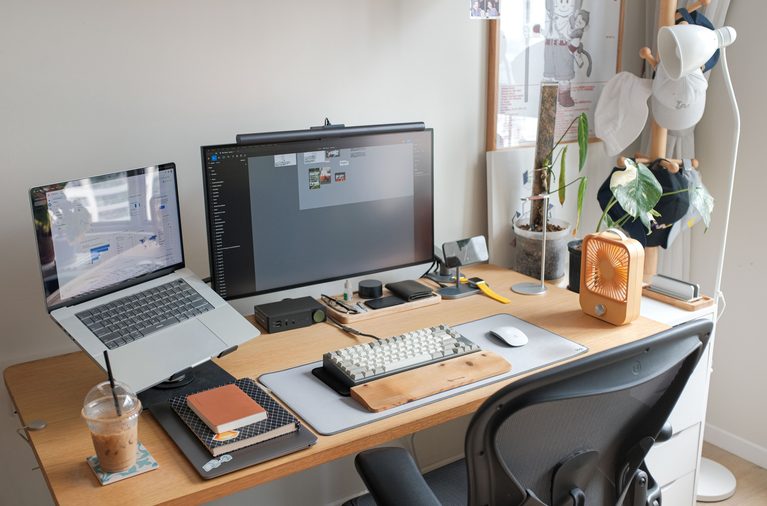
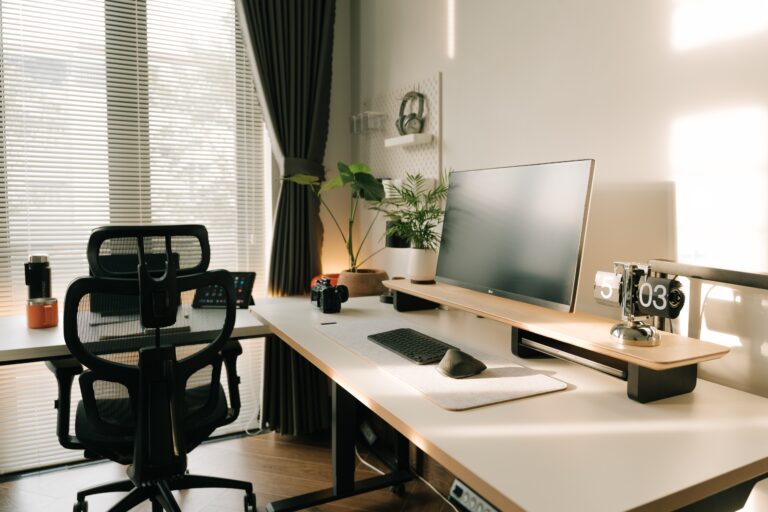
In a feng shui bedroom layout, the tension is simple: a desk is Yang (active, mental, awake), and a bed is Yin (passive, restorative). Working from a bedroom is the reality for most renters, so the goal is separation, not elimination.
- Place the desk as far from the bed as the room allows, ideally facing a wall or window, not the bed.
- Use a folding screen, bookcase, or curtain to hide the workspace at night.
- Shut the laptop, cover the desk with a cloth, and switch off the monitor before bed. You want the work to visibly end.
- Keep the chair out of your sightline from the pillow.
Feng shui bedroom layout for L-shaped and awkward-angle rooms
Sharp corners that point at your bed are called poison arrows, or sha qi. They show up as protruding wall corners, exposed beams, and angled alcoves. Practically, they create a feeling of pressure, and they often catch the eye as you fall asleep. To soften them, place a plant in front of the corner, round it with a curved piece of furniture, or drape fabric over the edge. For an L-shaped room, treat the sleeping zone as its own rectangle. Keep the bed in the "leg" away from the door, and use furniture or a rug to mark the boundary with the rest of the space.
Feng Shui Bedroom Layout: Furniture Symmetry, Nightstands and Storage
Nightstands: matching or mismatched?
In a couple's feng shui bedroom layout, two nightstands of equal weight and height signal equality. Neither partner is the guest in the other's room. They do not have to be identical, but they should feel balanced. For singles, one nightstand is fine; but if you are open to partnership, putting a second one on the other side, with a lamp, quietly leaves room for another person. Keep surfaces light: a lamp, a book, and a glass of water. A tower of paperwork, charging cables, and half-read mail tells your brain the day is not over.
Dressers and tall furniture
Tall dressers and wardrobes are best placed against walls, away from the foot and sides of the bed. A tall piece looming over your head, or one that crowds a walkway, creates visual weight and blocks easy movement. Keep at least two feet of clear path around the bed. If you have to put a tall wardrobe near the bed, choose one with closed doors rather than open shelves, since visual clutter close to your eyes keeps the mind busy.
Under-bed storage: what is safe
A feng shui bedroom layout wants energy to circulate under the bed as it does everywhere else. That is why a loaded under-bed zone is considered a trap: it can hold stagnation right beneath your body.
- Fine to store: clean bedding, soft linens, off-season clothing in breathable bags, and light slippers.
- Avoid storing: shoes, electronics, paperwork, sports equipment, old keepsakes, and anything tied to stress or past relationships.
- Better still: keep the space as open as you can. If you need storage, choose a few flat, labeled boxes and leave air around them.
Feng Shui Bedroom Layout Energy: Mirrors, Direction, Colour, Light and Plants
Mirrors: where they help and where they hurt
On mirrors, the feng shui bedroom layout consensus is clear: avoid mirrors that reflect the bed. A mirror facing you while you sleep bounces energy, doubles the room, and can startle you in the dark. If you have a mirrored wardrobe, cover it at night with curtains, a cloth, or sliding panels. A mirror on the door is allowed, as long as it does not reflect the bed. In fact, a small mirror placed on a wall can help you keep the door in view if your bed cannot sit in the perfect command position, though you should angle it so it never faces the pillow.
Sleeping head direction
This is the most debated corner of feng shui, and honesty serves you better than certainty. Classical schools tie direction to your personal Kua number, which you can calculate from your birth year and gender. If you want something simpler, here is the general reading:
- North: stillness and depth. A favorite for deep rest, though some traditions avoid it.
- East: growth, vitality, and fresh starts. Often recommended for new chapters and health.
- South: fire and activity. It can feel stimulating, so it suits light sleepers less.
- West: softness, creativity, and completion. A gentle choice for winding down.
If the compass and your feng shui bedroom layout disagree, choose the command position. A secure, door-facing bed beats a perfect direction every time.
Colours and lighting
The best feng shui bedroom colours are the ones that lower your pulse: soft earth tones, warm whites, sage, dusty blue, and gentle neutrals. Skip saturated reds and electric brights, which push the room toward Yang. Layer the light the way the sun does. Use warm bulbs (2700K or lower) in the evening, dimmers or bedside lamps rather than overhead light, and blackout curtains for the night. In the morning, let real daylight in. This is circadian rhythm design as much as feng shui, and it makes any feng shui bedroom layout work harder.
Plants and electronics
Plants bring life, but too many in a bedroom can crowd the air and the mood. Keep one or two soft-leaved plants, like a peace lily or snake plant, away from the bed and out of the line of the door. Electronics are the larger problem. Keep the TV out or covered, charge phones across the room, and move routers and clocks away from your head. A calm feng shui bedroom layout needs a room that feels like a retreat, not a control center.
Feng Shui Bedroom Layout Comparison Table
Use this feng shui bedroom layout cheat sheet as a quick reference when you are standing in the room with a tape measure.
| Layout Scenario | Ideal Feng Shui Setup | Common Mistake | The Quick Fix |
|---|---|---|---|
| Bed and door | Diagonal to the door, door visible from the pillow | Feet pointing straight at the door (coffin position) | Add a footbench, rug, or screen to break the line |
| Bed under a window | Solid wall behind the headboard | Headboard with no support beneath a window | Tall, heavy headboard plus blackout curtains closed at night |
| Bed against a side wall | Both sides of the bed accessible | One partner climbing in from the foot | Pull the bed out or move to a low platform frame |
| Ensuite bathroom | Bed not aligned with the bathroom door | Door left open, toilet visible | Keep the door shut, lid down, use a rug or curtain as a buffer |
| Bedroom desk | Desk far from the bed, facing a wall | Work area visible from the pillow | Screen, curtain, or cloth to cover the desk at night |
| Small room (single) | One open side, one nightstand, clear floor | Bed jammed into a corner | Pull one side away from the wall and declutter |
| Couple's nightstands | Two balanced nightstands and lamps | One side left empty, one side overloaded | Match weight and height, keep surfaces minimal |
| Mirrors | No mirror reflecting the bed | Mirrored wardrobe facing the pillow | Cover or reposition at night |
| Under-bed space | Open or lightly filled with bedding | Shoes, files, or electronics stored below | Clear it out and keep only soft linens |
Five Quotes Worth Sharing
Save these feng shui bedroom layout tips for your notes app, your Pinterest board, or the friend who just moved apartments.
💡 Feng Shui Tip: Your bed is a throne for rest. Give it a solid wall behind it and a clear view of the door.
Click to tweet
🌙 Feng Shui Tip: If the foot of your bed points at the door, break the line with a bench or a rug. Small stop, big calm.
Click to tweet
🪞 Feng Shui Tip: Let nothing in your bedroom watch you sleep. Cover the mirror before bed.
Click to tweet
🌿 Feng Shui Tip: A bedroom should feel like a retreat, not a control center. Move the screens out of reach.
Click to tweet
✨ Feng Shui Tip: Leave space on both sides of the bed. A room that has space for two is a room that welcomes love.
Click to tweet
Feng Shui Bedroom Layout: Your Questions Answered
Which direction should my bed face for better sleep?
Your head direction depends on the school of feng shui. Classical practice uses your personal Kua number; a simple rule is east for vitality, north for deep stillness, west for calm, and south only if you find it comfortable. If the room forces a compromise, prioritize the command position over the compass.
Is it bad feng shui if my bed faces the door directly?
Yes, if the foot of the bed points straight at the door, it is known as the coffin position and is considered unsettling for sleep. Turn the bed diagonally if you can, or break the line with a footbench, rug, or screen so the door is no longer in a straight path to your feet.
How do I arrange a feng shui layout in a small bedroom?
Keep the headboard on a solid wall, leave at least one side of the bed open (both for couples), and choose a low platform bed or a smaller frame to free up floor space. Use one balanced nightstand, keep the floor clear, and store off-season items in closed storage away from the bed.
What items should never be kept under the bed?
Avoid shoes, electronics, paperwork, sports gear, old keepsakes, and anything linked to stress or past relationships. These items hold stagnant energy and can disrupt sleep. Clean bedding or soft linens are fine, and an open, airy underbed space is best.
How do I set up a feng shui bedroom for a single person or a couple?
For couples, use two matching nightstands and lamps and keep both sides of the bed accessible so neither partner feels like a guest. For singles seeking love, create space for two with a nightstand on each side and clear solo symbols like a single chair, so the room signals openness to partnership.
Further Reading
Different teachers emphasize different details. These four guides cover the feng shui bedroom layout from other angles and are worth a look once your bed is in place.
- Gira: designing a feng shui bedroom
- Hernest: feng shui bedroom layout for better sleep and positive energy
- CHITA LIVING: how to arrange your bedroom for optimal feng shui
- Rossetti Art: positive energy placement in a feng shui bedroom
Build the Room You Rest In
A feng shui bedroom layout does not have to be large, expensive, or perfect. It needs a bed you can trust, a door you can see, and a floor you are not tripping over. Start with one change tonight: turn the bed, cover the mirror, move the phone across the room. Notice how the room answers.
The rest will follow, piece by piece, the way a good home always does. If you want a room-by-room starting point, read how to feng shui your bedroom. For more renter-friendly guides on calm, considered interiors, keep exploring on Veplat.