
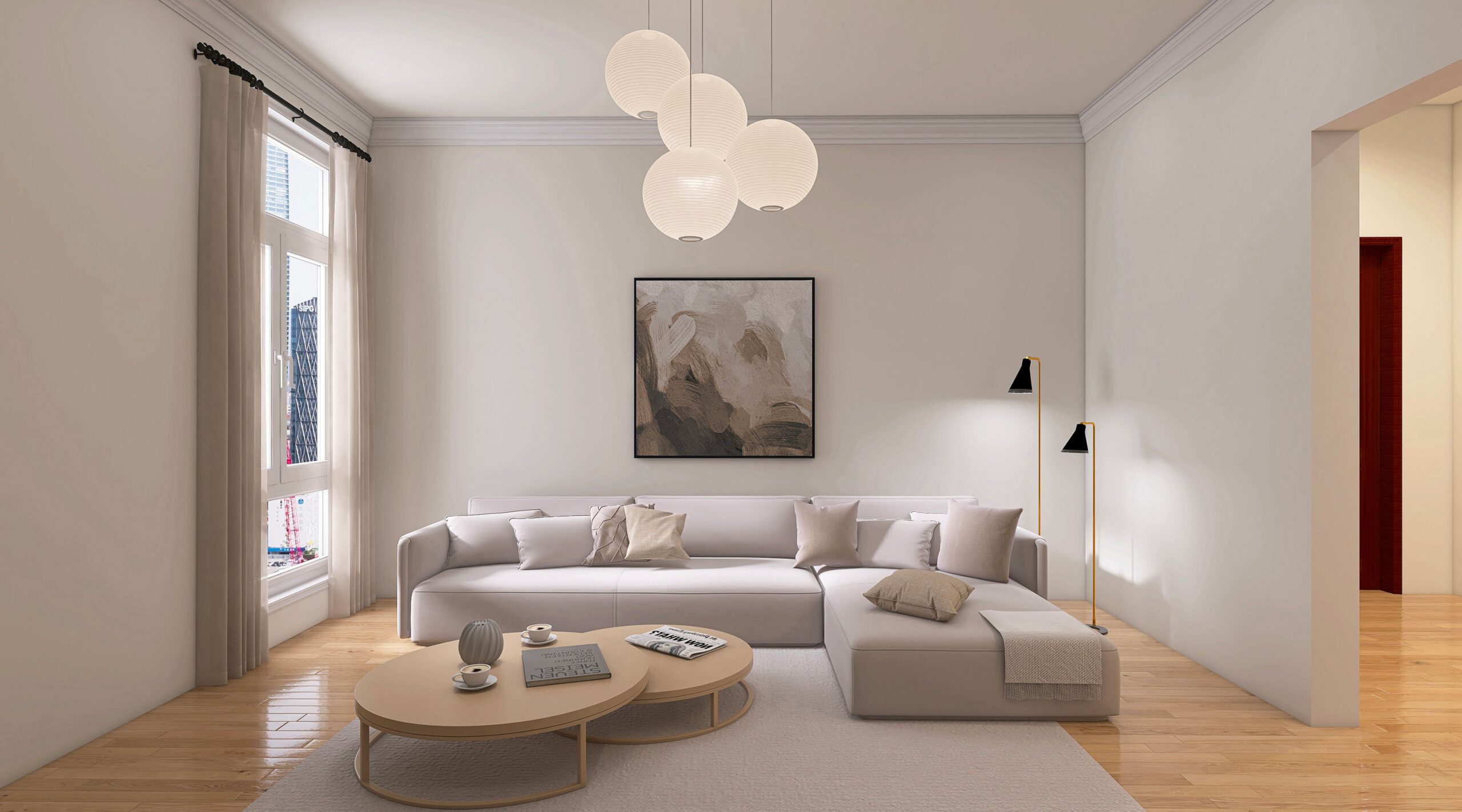
Front Door Feng Shui Small Living Room Layout: How to Create Flow When There’s No Foyer
Interior Feng Shui Guide
Feng Shui Small Living Room Layout: 7 Stunning No Foyer Ideas
Practical, expert-backed solutions for balancing energy in compact entryways
In many apartments and starter homes, you open the front door and you're already in the living room. There's no foyer, no hallway, and nowhere obvious to put your keys. The sofa is often the first thing you see, and sometimes the first thing you bump into.
A good feng shui small living room layout fixes this by making a clear, deliberate path between the door and the rest of the room. In Feng Shui, the front door is called the "mouth of Chi" — it's where energy, opportunity, and nourishment enter the home.
When planning a feng shui small living room layout, that energy has nowhere to spread out. If the layout is cluttered, Chi gets stuck at the door. If the path is a straight, open line, Chi rushes through and leaves before it can settle.
Traditional Feng Shui approaches vary between schools, but most agree on one underlying idea: the goal is balance — energy that comes in, slows down, and moves gently through the room. For more on how furniture arrangement affects flow in a feng shui small living room layout, Planner 5D's feng shui living room guide offers helpful layout diagrams.
Key Principles for a Feng Shui Small Living Room Layout
Creating a Landing Zone in Compact Spaces
You don't need walls to have an entryway — you only need a visual and physical threshold that tells people, and energy, that they've arrived inside your feng shui small living room layout.
- Anchor it with a rug. A small runner or round rug inside the door defines the arrival area, even if it's only 3 feet deep.
- Add a slim landing surface. A narrow console, a floating shelf, or a wall-mounted ledge gives keys, mail, and bags a home so they don't spread into the living space. If storage is tight, tucking overflow items into a nearby self-storage unit can keep the entry clear year-round.
- Light it on purpose. A sconce or small lamp near the door stops the entry from feeling like a dark tunnel.
- Keep it clean. Shoes, umbrellas, and packages by the door block energy right at the source — a closed cabinet or lidded basket solves this instantly.
The buffer zone in any feng shui small living room layout should be the calmest, most orderly part of your home. It sets the tone for everything past it.
Smart Furniture Placement for Open Pathways
When it comes to your feng shui small living room layout, the sofa is the most important piece — how you place it decides whether the room feels welcoming or defensive.
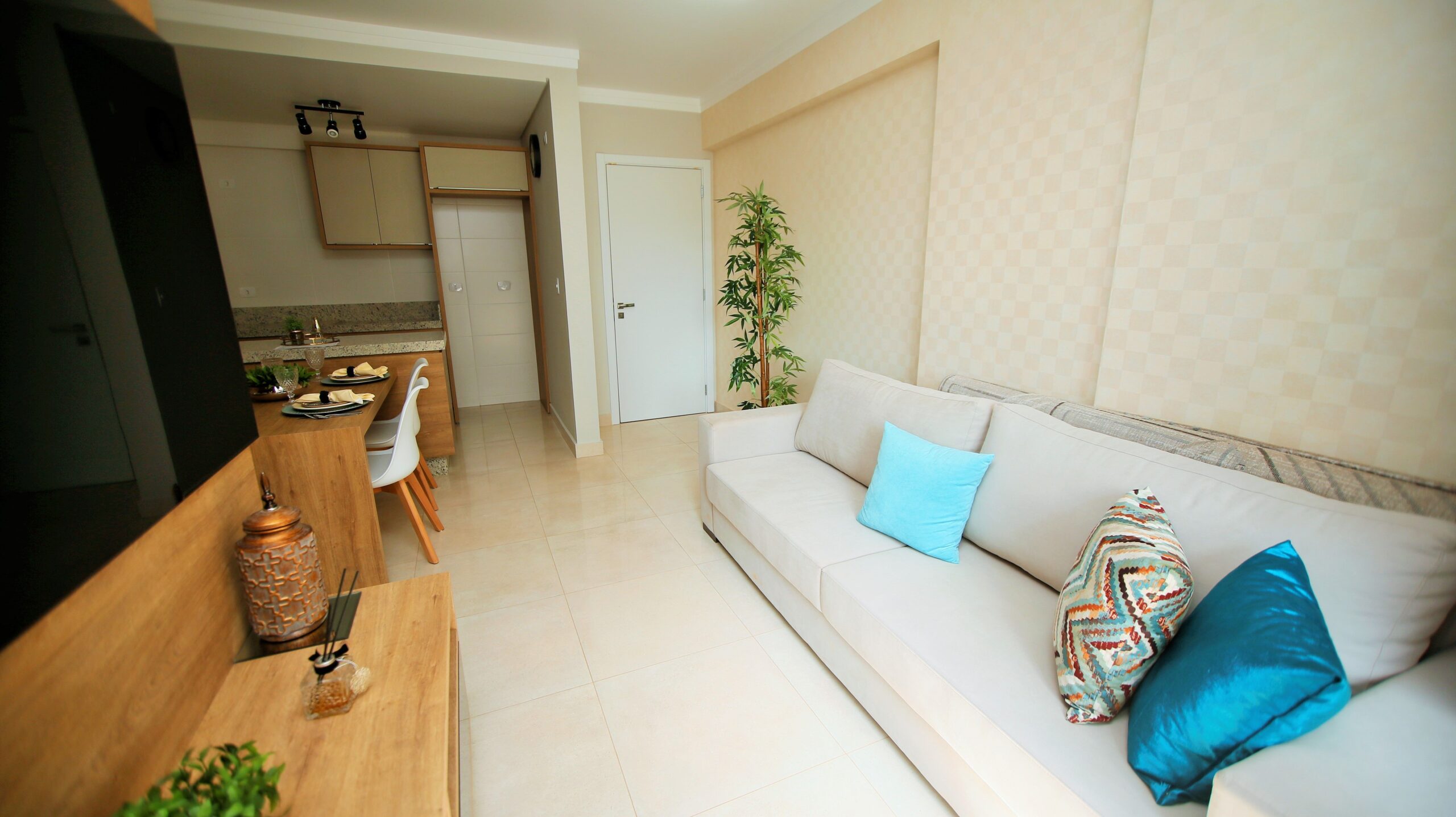
- Avoid putting the sofa's back to the door. If you have no choice, a console table or low shelf behind it acts as a protective anchor.
- Aim for the command position. The best seat faces the door diagonally, so you can see who enters without sitting directly in line with it.
- Leave at least 30–36 inches of walkway. Chi, like people, needs a clear, curving path to move comfortably.
- Choose furniture with visible legs. Pieces raised off the floor let light pass underneath, making a compact room feel larger — the same principle that makes small kitchens feel more open.
- Favor round or oval coffee tables. Soft edges keep energy moving, while sharp corners create what practitioners call "poison arrows" — especially noticeable in a tight feng shui small living room layout.
Best Front Door Colors for Energy Flow
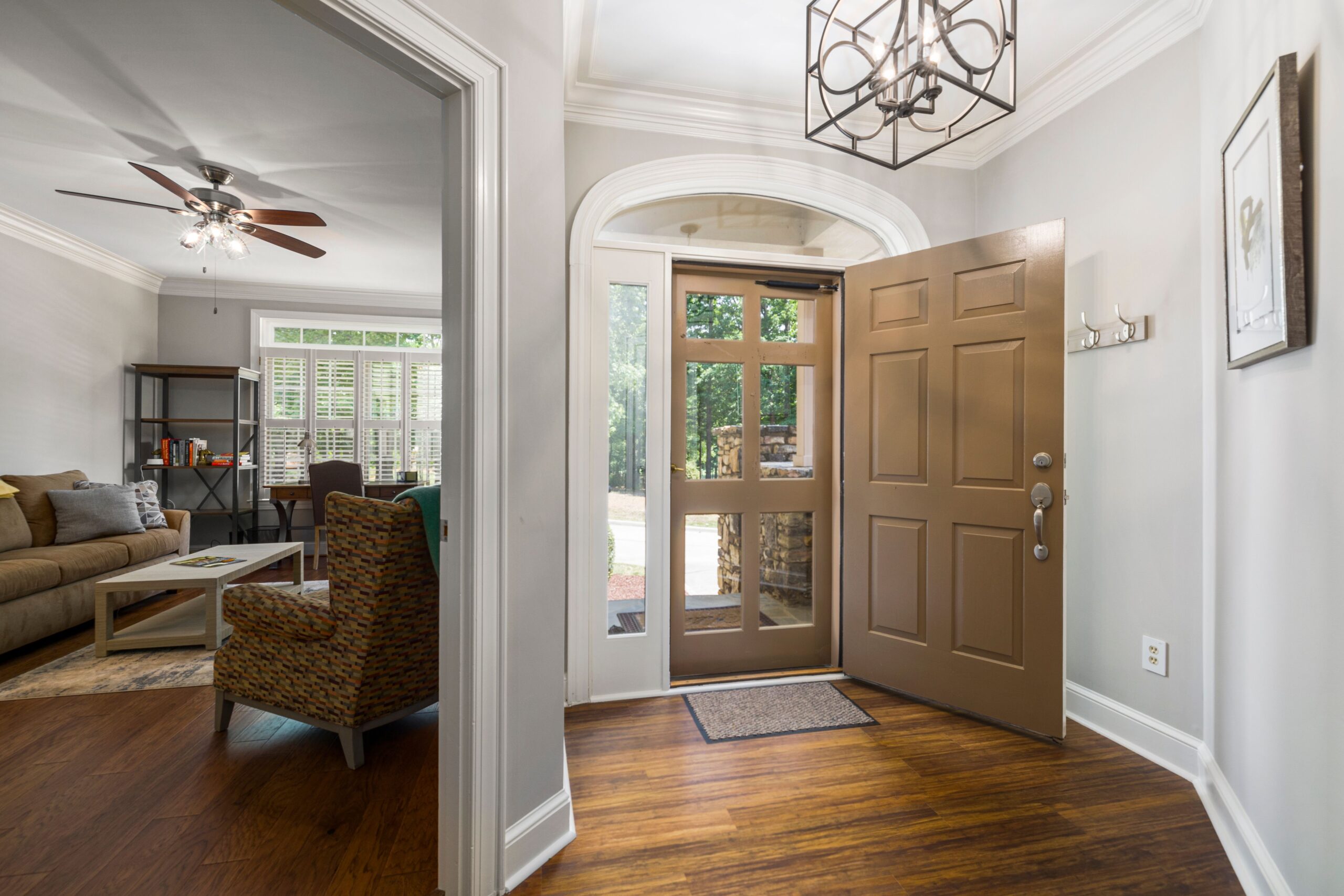
Your door color is the first message your home sends out. In Feng Shui, each color corresponds to one of the Five Elements — Fire, Water, Wood, Metal, and Earth — and each element is tied to a compass direction. Selecting the right color enhances your overall feng shui small living room layout by optimizing energy entering the house. The exact associations can vary between Feng Shui schools, so treat this as a traditional design framework rather than a fixed rule.
To find your door's direction, stand inside your home facing out through the front door and check a compass.
| Direction | Element | Recommended Colors | Colors to Avoid |
|---|---|---|---|
| South | Fire | Red, brick, oxblood, burgundy | Black, blue (Water extinguishes Fire) |
| North | Water | Black, navy, charcoal | Yellow, tan (Earth blocks Water) |
| East / Southeast | Wood | Green, sage, olive, teal | White, metallics (Metal cuts Wood) |
| West / Northwest | Metal | White, gray, soft metallics | Bright red (Fire melts Metal) |
| Southwest / Northeast | Earth | Terracotta, sand, camel, soft yellow | — |
Neutrals are a practical choice for renters who can't repaint the door — the element can still be reinforced through a doormat, planter, or door hardware in the matching color. Renters looking to add color elsewhere without a permanent commitment might also consider a peel-and-stick backsplash in the kitchen for the same low-commitment approach.
Layout Solutions for Homes Without a Foyer
Strategic Mirror Placement Near Entrances
Mirrors are one of the best tools in a feng shui small living room layout — they double the light and add visual depth. But placement matters:
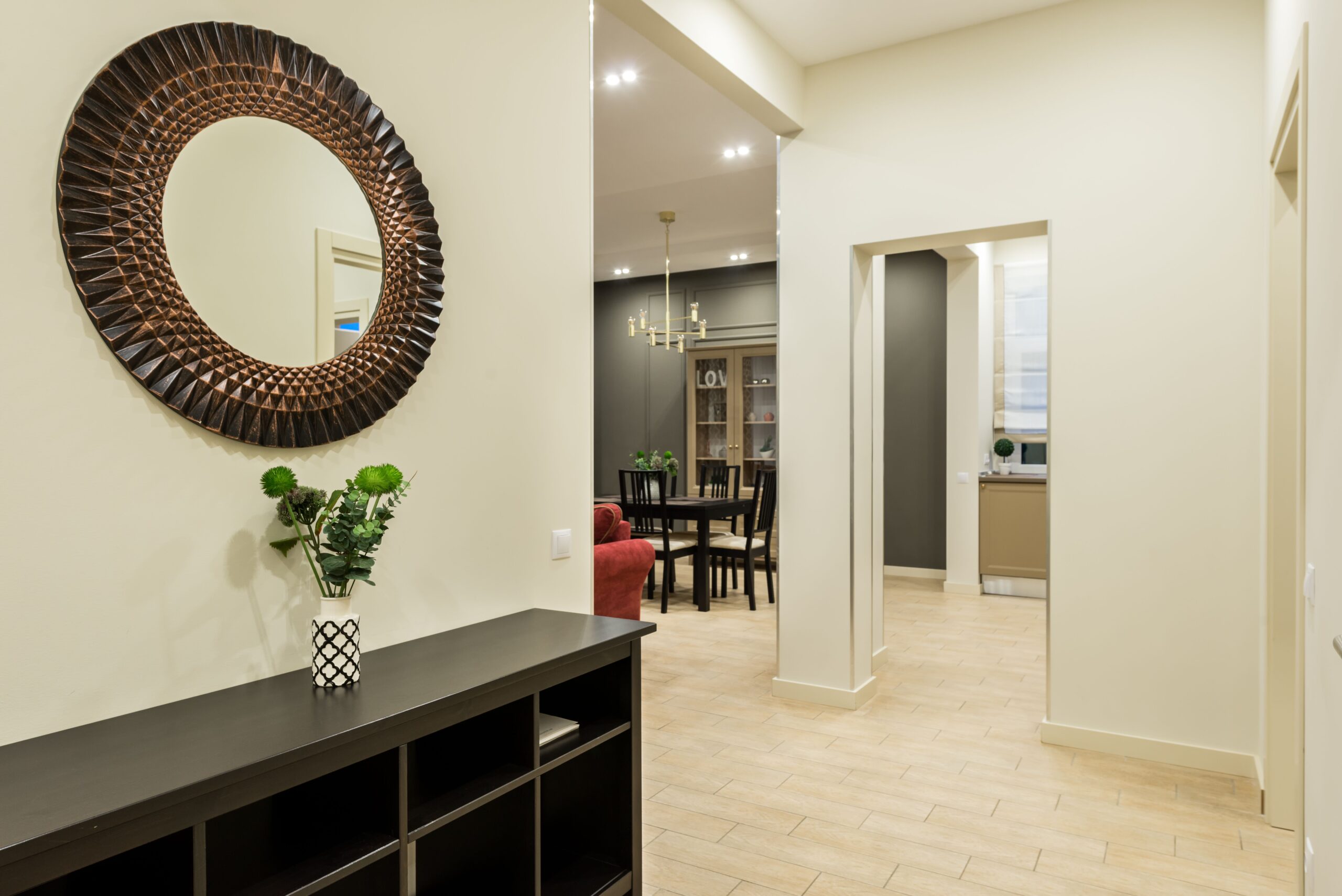
- Never hang a mirror directly across from the front door. Traditional Feng Shui holds that this bounces incoming Chi, and opportunity, straight back outside.
- Place mirrors on a wall perpendicular to the door instead, where they spread energy into the room.
- Reflect something beautiful — a window, a plant, or artwork, never clutter or a bathroom door.
Slowing Energy Flow with Dividers and Plants
When the front door opens onto a straight line — toward a window, a back door, or a long hallway — energy moves through too fast. Gentle interruptions slow it down without blocking it:
- Rugs ground energy near the entry and subtly redirect foot traffic.
- Screens and dividers — a folding screen, slatted wood panel, or open-back bookshelf — create a soft "reveal" moment.
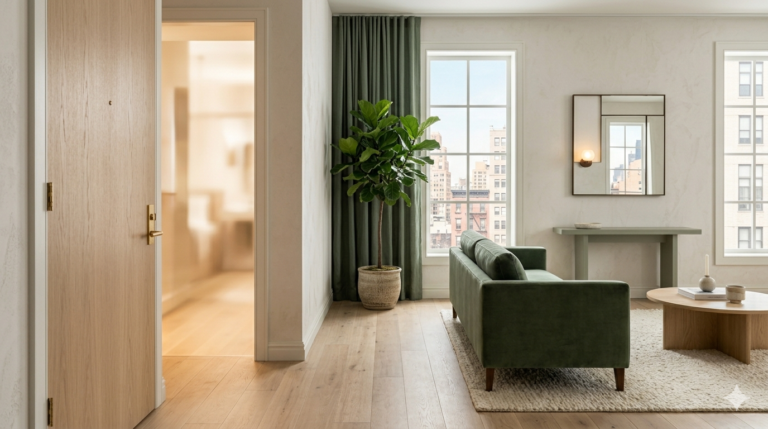
- Plants with rounded leaves (fiddle leaf fig, rubber plant, jade) add living energy; spiky plants like cacti are best kept away from the door.
- Curved pathways are generally considered gentler than a hard straight line from door to seating.
Together, these elements make a feng shui small living room layout feel layered and intentional — the quiet sophistication found in the best editorial interiors. For real-world examples of homes managing multiple doorways in one room, this r/FengShui discussion thread is a useful reference point, and Minimal & Modern's layout ideas pair well with a minimalist aesthetic.
Frequently Asked Questions
Is a Mirror Facing the Front Door Bad Feng Shui?
Traditional Feng Shui teaches that a mirror directly facing the front door bounces incoming Chi straight back outside, along with opportunities. Hang your mirror on a perpendicular wall instead, where it can widen the space and circulate light inward.
How to Feng Shui Stairs Facing the Front Door?
Slow the energy rushing down the staircase and out the door. Place a round rug or a leafy potted plant at the base of the stairs, add warm lighting at the landing, and consider a faceted crystal between the bottom step and the door.
How to Fix a Front Door Facing the Back Door in Feng Shui?
When doors align, Chi is believed to race straight through without nourishing the home. Break the line with a folding screen, a tall plant, or a round table between them, and keep the back door closed when possible.
Is a Black Front Door Good Feng Shui?
Often yes, especially for north-facing entrances, since black represents the Water element tied to career and flow. It's generally advised to avoid it on south-facing doors, where Water is said to clash with the Fire element governing that direction.
How to Use Feng Shui Coins at the Front Door?
Feng Shui coins are traditionally used as symbolic objects associated with prosperity. Three coins tied with a red ribbon can be placed under the doormat or hung on the interior doorknob. Their meaning is symbolic rather than scientifically established.
Final Thoughts
Creating a functional feng shui small living room layout doesn't require a renovation or a bigger home. It starts with small, deliberate choices: a rug that marks where you arrive, a mirror moved to a side wall, a door painted in the right element, or a plant placed to soften a straight line.
Start with one change this week. Clear the entry, reposition the sofa, or add a light by the door — then notice how the room feels when you walk in. In a feng shui small living room layout, every choice makes a difference, and when energy flows well, even the smallest space feels generous.
4 Comments
Comments are closed.