
How to Feng Shui Your Bedroom:
5 Proven Steps for a Perfectly Balanced Rental Space
Knowing how to feng shui your bedroom is one of the most powerful things a renter can do — no renovation required, no landlord approval needed. This guide covers everything: bed placement, mirror rules, the commanding position, and five changes you can make today.
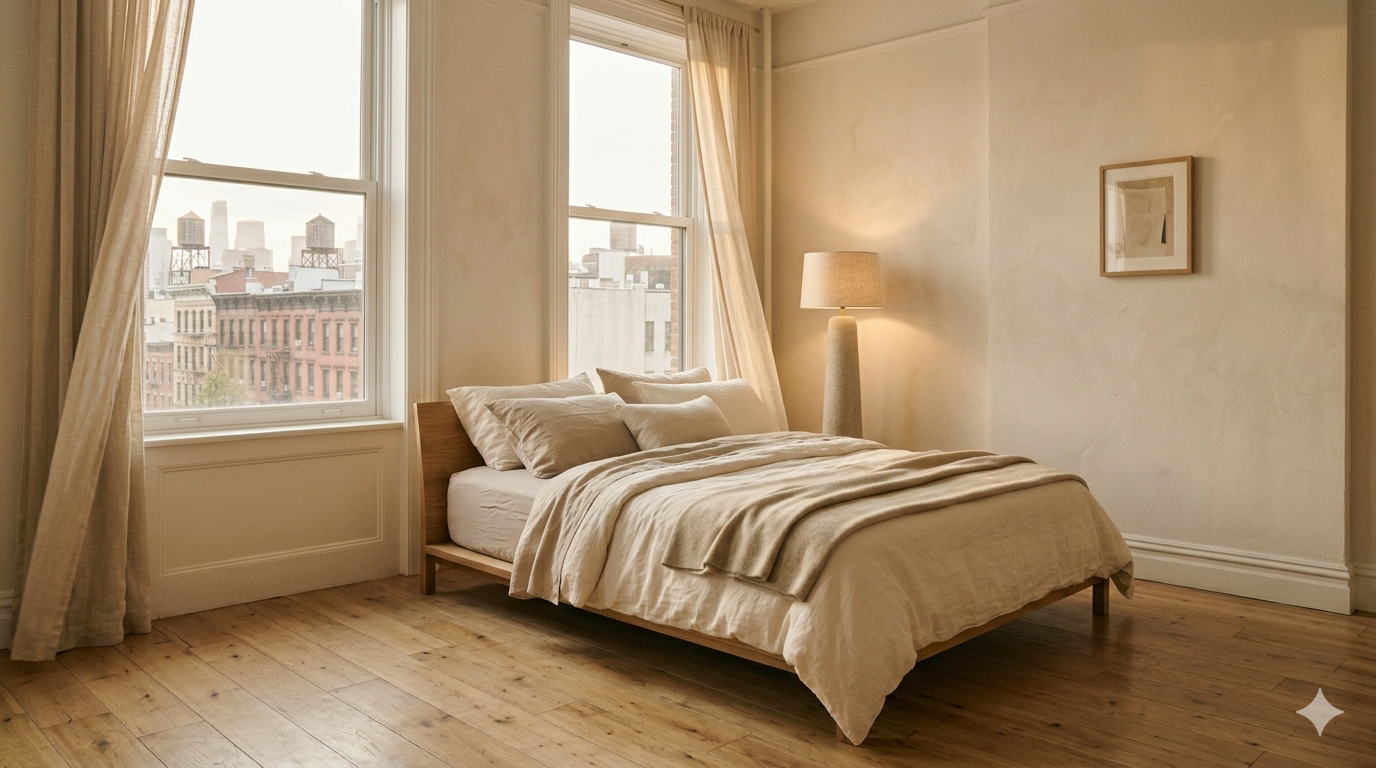
Why the Bedroom Is the Most Important Room to Feng Shui in a Rental Apartment
When people first learn how to feng shui your bedroom, they often expect a list of furniture rules. What they discover instead is a practice rooted in one foundational idea: the spaces where we are most still are the spaces where we are most shaped. The bedroom — where you spend roughly a third of your life, where your nervous system repairs itself, where you are most receptive and least defended — is the room where feng shui delivers its most immediate and personal results.
Feng shui, rooted in ancient Chinese philosophy, operates on the principle that the arrangement of objects and spaces influences the flow of qi — the life force that moves through environments and through people. When you know how to feng shui your bedroom, a room with obstructed flow, a room with obstructed flow, poor placement, or chaotic energy is said to affect sleep quality, emotional resilience, creativity, and even romantic life. Modern environmental psychology has arrived at similar conclusions through different routes: our physical surroundings shape our inner states in ways we consistently underestimate.
Renters are, interestingly, better positioned to apply feng shui than they often realize. The practice centers entirely on what you can control — furniture arrangement, what you bring in, what you remove — not what is built into the walls. As Architectural Digest notes, the most impactful feng shui changes are almost always the ones that cost nothing. That the walls belong to someone else is largely irrelevant. Your bed, your objects, your choices: those are entirely yours.
To truly understand how to feng shui your bedroom is to understand one thing clearly: this practice is not about perfection. It is about removing obstacles to ease. In a rental bedroom, the most powerful changes are almost always the simplest — moving the bed, clearing what is stored beneath it, and eliminating whatever does not belong in a room whose only purpose is rest.
The bedroom in feng shui is specifically associated with rest, intimacy, and personal renewal. It is not a space for ambition, productivity, or the accumulation of things. Treating it as a sanctuary — rather than as a multi-purpose room that happens to contain a bed — is the foundational principle behind every recommendation that follows. For a broader understanding of how these principles apply across the whole apartment, our guide to feng shui interior design rules provides the full context.
The Feng Shui Bedroom Layout Rules That Actually Work in Small Spaces
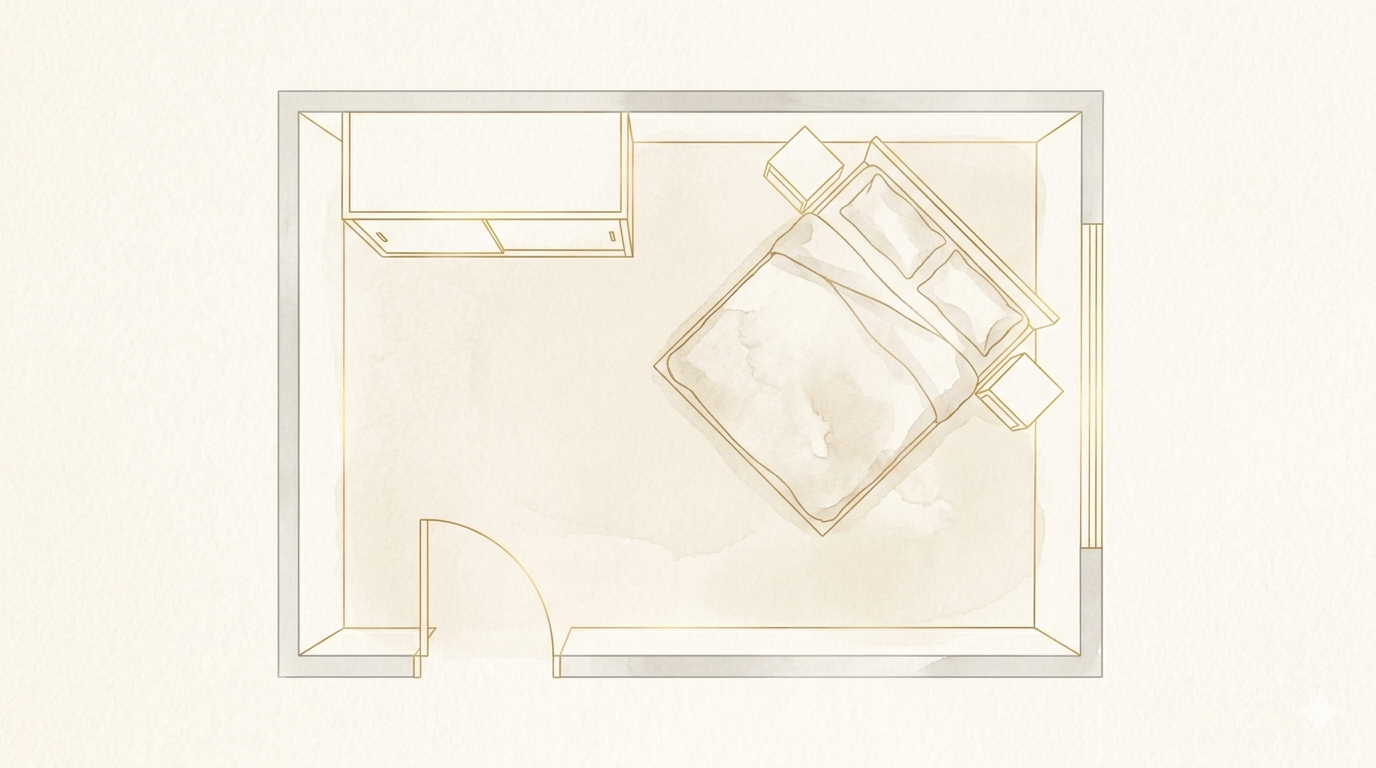
The first question most people ask when learning how to feng shui your bedroom is: which way should the bed face? The answer requires a distinction between two separate questions — cardinal direction, and positional relationship to the room’s door. Feng shui prioritizes the latter, because the door is the primary source of qi entering the bedroom. Where your bed sits in relationship to that entrance determines the quality of energy you receive while you sleep.
The core principle of any good feng shui bedroom layout when you learn how to feng shui your bedroom is the commanding position. Place your bed so that you can see the bedroom door clearly from where you lie, but without being directly in line with it.
In practice, this typically means a diagonal alignment — bed on the far wall to the side of the door, never facing it head-on, and never with your feet pointing directly at it (called the “coffin position” in feng shui, considered deeply inauspicious). This positioning gives an instinctive sense of ease and safety during sleep, because your nervous system is not on alert.
As for compass direction — which way should the bed face in feng shui according to the cardinal points — traditional practice suggests sleeping with your head toward the south supports vitality and social energy, while east is associated with new beginnings and health. North-facing positions are generally avoided, as they are said to deplete energy over time. The Spruce’s feng shui bed placement guide covers compass directions in depth.
In the context of a small urban apartment where layout options are limited, achieving the commanding position takes absolute precedence over compass alignment. A commanding position facing west is infinitely preferable to a north-facing bed directly in line with the door.
If your apartment layout makes the commanding position feel impossible — common in studio apartments with awkward door placements — place a small mirror on the wall opposite the door so you can see the entrance reflected while lying in bed. It is an imperfect workaround, but a time-honored one in feng shui practice.
What to avoid in a rental bedroom beyond the door alignment issues: a bed pressed against the wall on both sides, a bed positioned beneath a low beam or directly under an overhead light fixture, and a bed that shares a wall with a bathroom.
Each of these has both a practical and an energetic dimension. For a complete breakdown of how bed placement works in every room type, see our dedicated guide to feng shui bedroom layout and bed placement rules. For how the commanding position applies beyond the bedroom — to your entryway and living room — see our guide to front door feng shui and small living room layout.
Where to Put a Mirror in Your Bedroom According to Feng Shui
Of all the steps involved in learning how to feng shui your bedroom, the mirror question generates the most confusion — and the most anxiety, because renters often have no choice about where the previous tenant left mirror fixtures. The core principle is straightforward: mirrors should not face the bed directly. Mirrors activate energy; they amplify and reflect. In a space designed for rest, that amplification is the opposite of what you want, particularly during the hours you are most receptive.
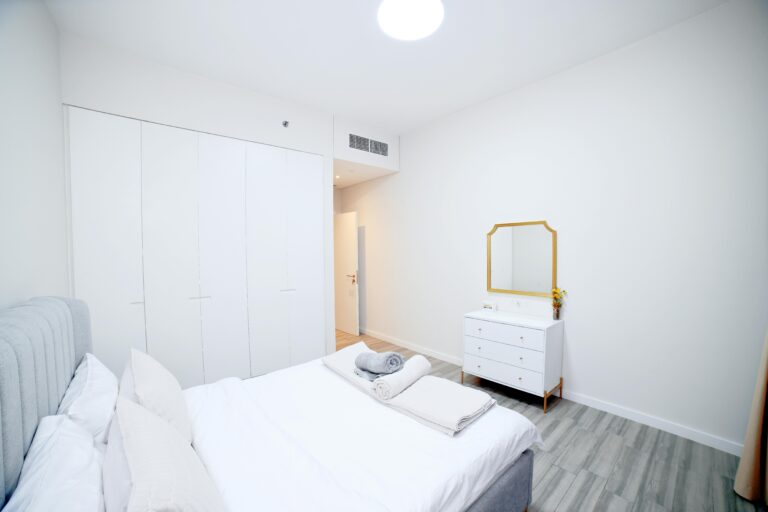
Knowing how to feng shui your bedroom means knowing where mirrors belong. Where to put a mirror in your bedroom according to feng shui comes down to a few well-supported positions. A mirror on a wall perpendicular to the bed — the side wall, beside a wardrobe — reflects natural light without directing energy toward the sleeper.
A mirror inside or on the back of a wardrobe door is ideal, as it can be closed at night. If you have a built-in mirror that faces the bed and cannot be removed — a common situation in rental apartments — a fabric panel, curtain, or decorative screen hung in front of it at night is a fully sanctioned feng shui solution, and one that also adds textural warmth to the room.
Common mistakes renters make: placing a mirror directly opposite the bedroom door, positioning a mirror on the ceiling, and using oversized mirrors in a very small bedroom where there is no wall position that keeps the reflection away from the bed. In the last scenario, a smaller mirror that reflects a window rather than the bed is always the better choice.
The mirror is the most active object in a room. Where you put it determines what it activates. When you know how to feng shui your bedroom correctly, mirrors work with light — not with the sleeping body. The distinction is the difference between a room that feels alive and one that feels restless.
If you love a large mirror in the bedroom but struggle with placement, try angling it at 45 degrees in a corner rather than flush against a wall. This position reflects the ceiling and the light source, not the bed, and adds depth without directing active energy toward your sleeping space.
5 Feng Shui Bedroom Changes You Can Make Today Without Touching a Wall
The most powerful ways to feng shui your bedroom in a rental require no tools, no permission, and no irreversible decisions. Each of the following changes addresses a specific pattern of energetic stagnation — and delivers a result you are likely to feel within a few nights. The beauty of knowing how to feng shui your bedroom is that the most effective interventions cost nothing at all. Every renter who learns how to feng shui your bedroom discovers the same truth: the biggest changes require no budget, only intention.
1. Clear Everything from Under the Bed
Storage under the bed is one of the most common renter solutions to a shortage of closet space — and one of the most consistently problematic when you want to know how to feng shui your bedroom properly. The space beneath the bed should be open and clear, allowing energy to circulate around you as you sleep.
Storing luggage, boxes, or emotionally charged objects below where you sleep introduces their energetic weight into your rest. If storage is genuinely unavoidable, use only soft, neutral items such as extra linens in breathable containers — never work materials, sharp objects, or anything emotionally significant.
2. Remove Electronics from the Room Entirely
The television in the bedroom is perhaps the most universally discouraged element when you feng shui your bedroom. A television reflects the room when off, functioning as a dark, distorted mirror that faces the bed. It introduces the energy of news, entertainment, and stimulation into the space reserved for recovery. Phones, laptops, and tablets carry similar energy signatures. Moving them to another room — or placing them in a drawer away from the bed — is among the most immediately effective changes available when you know how to feng shui your bedroom.
3. Add Symmetry to the Bedside Arrangement
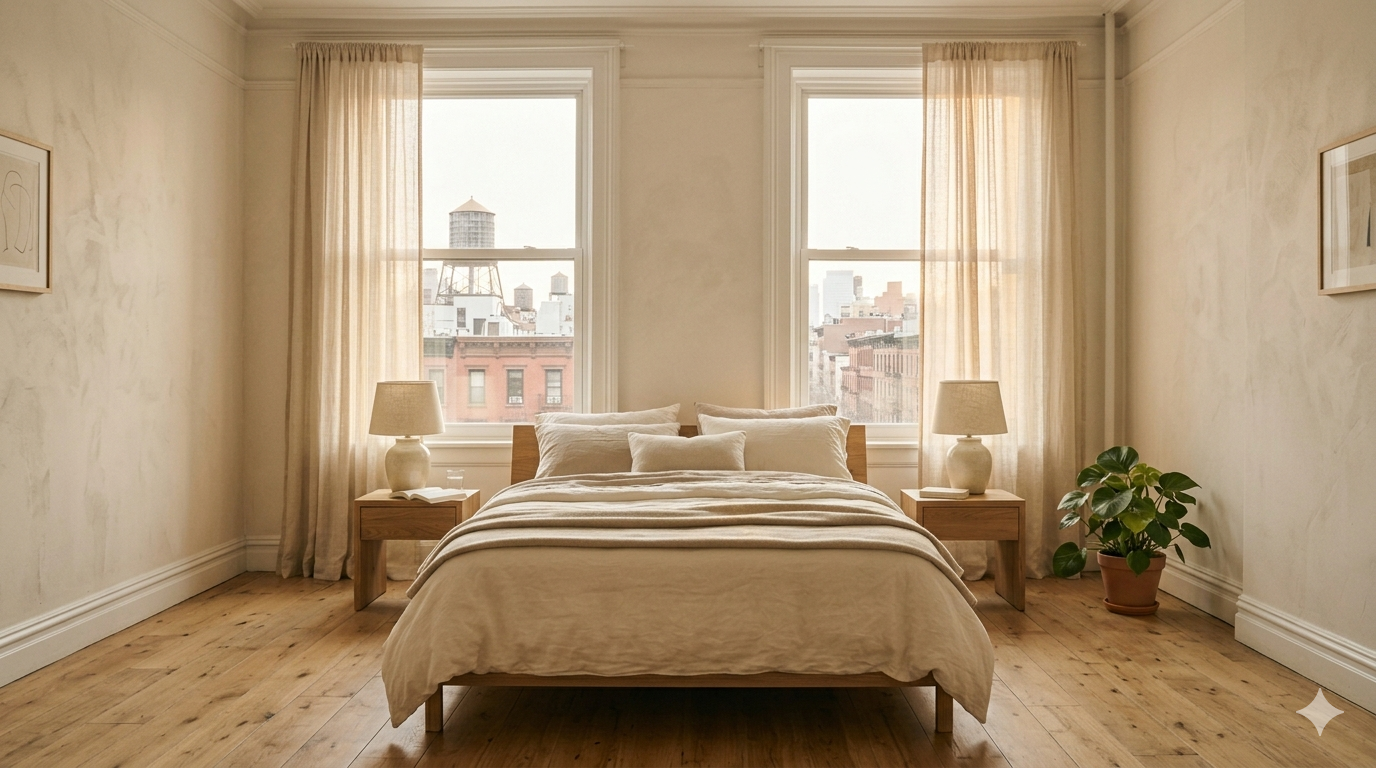
Symmetrical bedside tables and lamps on both sides of the bed signal balance to both the eye and, in feng shui terms, to the room’s energy. This is especially significant for partnership energy: a bed pushed against a wall with access from only one side creates an imbalance practitioners associate with difficulty in relationships. If a second nightstand is not possible, even a small stool or tray on the less-accessible side creates a sense of intentional equilibrium.
4. Introduce Living Plants with Rounded Leaves
Plants bring life force into a bedroom. In feng shui, the shape of the leaves matters when you feng shui your bedroom: rounded, soft foliage such as a pothos, jade plant, or rubber tree is calming, while spiky plants such as cacti introduce a sharper energy that can feel agitating in a rest space. Position plants in the corner of the room furthest from the bed, where they enliven a stagnant corner without crowding the sleeping area.
5. Declutter Every Horizontal Surface
Clutter, in feng shui, is stagnant energy made visible. Every object sitting on a dresser, windowsill, or floor that serves no active purpose is a small drain on the room’s vitality. Begin with surfaces rather than storage — you do not need to rethink your closet before you see results.
A cleared dresser top, a tidy bedside table, and an unobstructed path from the door to the bed are sufficient to change the quality of the room’s energy perceptibly. For those with limited closet space, our guide to smart storage solutions for rental apartments offers renter-compatible strategies for keeping the visual field clean. And if your decluttering impulse extends to the kitchen, our editorial on rental kitchen backsplash ideas shows how one surface change can transform an entire room.
How to Feng Shui Your Bedroom When You Cannot Renovate
The apartment came with white walls, builder-grade lighting, and a carpet color chosen to offend no one and inspire nothing. You are not permitted to paint, to install, to alter. This is the reality of renting in most American cities, and it is not the obstacle it might appear to be. How to feng shui your bedroom in a space you cannot structurally alter is simply a matter of working with what feng shui has always worked with: the sensory environment.
Color is one of the most potent tools when learning how to feng shui your bedroom without renovation, and it requires no landlord approval. The bedroom in feng shui is best served by earthy, warm, muted tones — terracotta, warm white, deep sage, clay, linen, and soft blush correspond to the grounding and nourishing energies most conducive to rest. Introduce these through bedding, pillowcases, a throw blanket, and curtains. A set of warm linen curtains can transform the color temperature of a room as effectively as paint, while also softening the hard acoustics typical of rental apartments.
Light is the second great lever available to renters who want to know how to feng shui your bedroom without renovation. Overhead lighting — the single ceiling fixture most rental apartments come with — is energetically activating, which is precisely what you do not want in a bedroom. Replace or supplement it with lamps positioned at a lower height: bedside lamps, a floor lamp in a corner, candles on a dresser. Warm-spectrum bulbs (2700K or lower) create the quality of light that tells the nervous system it is safe to rest.
Scent is the third tool available when you know how to feng shui your bedroom without renovation — and it has a direct effect on the limbic system. Lavender, sandalwood, cedarwood, and frankincense have long associations with calm and groundedness, a connection supported by modern aromatherapy research. A diffuser on the dresser, a linen spray on the pillows, or a single quality candle used in the hours before sleep introduces sensory signals that condition the room — and your nervous system — toward rest.
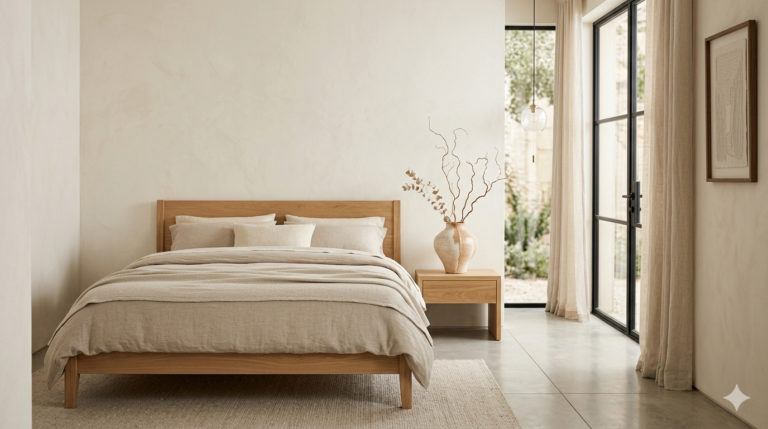
Texture is the final layer in any complete approach to how to feng shui your bedroom. A bedroom that is visually and tactilely rich — linen bedding, a wool rug beside the bed, a woven throw, wooden objects on the dresser — feels nourishing in ways that sparse, hard-surfaced rooms do not. Texture absorbs sound, warms color, and signals care. In feng shui, the material richness of a space is read as an expression of the attention its occupant has brought to it. This is quiet luxury in its most fundamental form: not expense, but intention.
Every tool in this guide — placement, proportion, light, scent, texture, and the careful editing of what enters and leaves the room — is available to renters regardless of square footage or lease restrictions. This complete approach to how to feng shui your bedroom requires nothing permanent and nothing expensive. Ultimately, how to feng shui your bedroom is not a question of what you are permitted to do, but of what you choose to bring into deliberate alignment. The room you sleep in shapes the person you wake up as. That equation is worth every bit of effort, every time.
Frequently Asked Questions
The most common questions renters ask about how to feng shui your bedroom — answered clearly.
The first rule of how to feng shui your bedroom is bed placement. In feng shui, the bed should face the door — meaning you can see the entrance from where you lie — but should not be directly in line with it. This is the commanding position, and it is the primary priority when you feng shui your bedroom. As for compass direction, sleeping with your head toward the south or east is traditionally favorable. However, when apartment layouts limit your options, the commanding position always takes precedence over cardinal direction.
When applying how to feng shui your bedroom principles to mirrors: they should not face the bed directly. The most supported positions are on a wall perpendicular to the bed — such as a side wall beside a wardrobe — where the mirror reflects natural light without reflecting your sleeping body. A mirror on the inside of a wardrobe door that can be closed at night is ideal. If a facing mirror is built-in and cannot be removed, hanging a fabric panel in front of it at night is a long-accepted feng shui workaround.
Yes — and mastering how to feng shui your bedroom is actually easier in a rental than you think. Because renovation is off the table, feng shui’s core tools (furniture placement, color through soft furnishings, light, scent, and decluttering) become more central and more powerful. The vast majority of meaningful changes when you feng shui your bedroom require no drilling, no permanent alterations, and no landlord approval whatsoever.
The commanding position is the most important concept in how to feng shui your bedroom. It is the placement in a room where you have the widest possible view of the door without being directly in front of it — a diagonal orientation that allows you to see who enters while remaining protected.
Applied to the bed, it means positioning your headboard against a solid wall on the side of the room that gives you sightlines to the door without direct alignment. This position promotes a sense of safety and ease during sleep, and is the foundational rule of how to feng shui your bedroom layout correctly.
The final rule of how to feng shui your bedroom: classic feng shui advises against mirrors facing the bed, televisions and electronics in the bedroom, exercise equipment, plants with sharp or pointed leaves, and clutter stored under the bed. Work materials — laptops, paperwork, anything that engages the mind in a task-oriented way — are also best kept out. The principle behind every item on this list is the same: when you feng shui your bedroom the right way, it should contain only what supports rest, relationship, and personal renewal.
2 Comments
Comments are closed.